Shibley Telhami Quotes
Many people would like Osama bin Laden … to hurt America, but they do not want bin Laden to rule their children.
Shibley Telhami, Middle East Academic Expert, Political Scientist & Pollster, Quoted in Philip H. Gordon, “Can the War on Terror Be Won”, Foreign Policy, November/December 2007
Sourced by: Eigen's Political and Historical Quotations


Slogans taken from posters listing 10 people targeted by Muslim extremists. Most were people who had said or published material that some fundamentalist Muslims had decided were offensive to Islam. One was Charlie Hebdo, the French Publisher who Islamic terrorists murdered later. Note the Americanisms that the terrorist propagandists adopted. The Wanted Dead or Alive was taken from the posters of the American West of the 19th century. The "Yes we can" was lifted from the Barack Obama 2008 campaign slogan. The "Bullet A Day Keeps the Infidel Away" is a takeoff on the American saying "An apple a day keeps the Doctor away." One of the reasons for these Americanisms was that the founding editor was Samir Khan, self-described American traitor.
The following day, Norquay publicly apologized.


36 days later, September 11, he did strike, and at the World Trade Center. The memo was kept secret by the Bush administration until public pressure as a result of the 9-11 Commission hearings forced the declassification and release. At that point it became clear that there was no reason that the memo could not have been released much earlier except that it was embarrassing.


He drove a rented SUV into a crowd at a Dining Hall at the University of North Carolina from which he had recently graduated. He was an Iranian-born American citizen who had perceived that American policies and practices abroad led to the death on many Muslims. His interpretation of the Koran agrees with most of the radical, extremist, theologians, but does not comport with the interpretation of moderate Muslim religious thinkers. In 2008, he was convicted and sentenced to 33 years of prison.

Bush claimed he did not remember the conversation. His incoming National Security Advisor, Condoleezza Rice, was also briefed about bin Laden by the Clinton anti-terrorism director, Richard Clarke. The Bush Administration ignored the warnings until bin Laden struck on 9-11


36 days later, September 11, he did strike. See {617467} for some of the specific contents. The memo was kept secret by the Bush administration until public pressure as a result of the 9-11 Commission hearings forced the declassification and release. At that point it became clear that there was no reason that the memo could not have been released much earlier except that it was embarrassing. See {637530} and {637533} for two other Bin Laden Warnings that Bush and his team ignored.


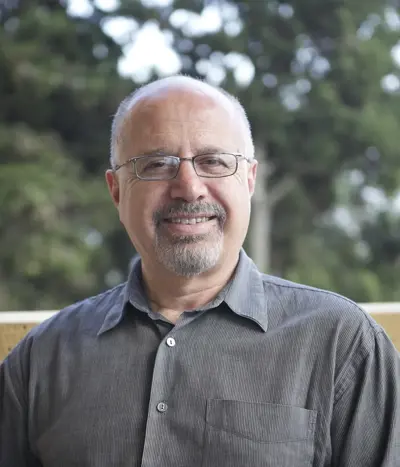
Shibley Telhami is a Palestinian-American Professor in the Department of Government and Politics at the University of Maryland, College Park, and a nonresident senior fellow of the Center for Middle East Policy at the Brookings Institution.
