Frans de Waal Quotes
Many economists are great believers in the idea that everything in nature is competitive and that we should set up a society which is competitive to reflect that. Anyone who cannot keep up, well, too bad.
de Waal, Frans. The Age of Empathy: Nature's Lessons for a Kinder Society. Harmony Books, 2009.

Most defenders of the Capitalist system that produces large inequities argue that interfering in the free market wouldl be worse. However this thesis argues that the inequality is actually good for the people including those at the low end of the ladder.


This is the first use of the famous phrase—“survival of the fittest.” Spencer thought of it as a synonym for Darwin’s “natural selection”, but modern scientists do not use the phrase because it is circular reasoning. It is the fittest who survive it implies when whichever species survives is obviously fittest for that time and place. It is also misinterpreted as a predation scale war which it is not. The lion is much stronger than the antelopes and feeds on them, but the lions are dying out while the antelopes are thriving and developing. The fittest may be so because the species is a faster and more reliable breeder. Most people with a limited knowledge of evolution and scince associate the fittest with the top predator. However, over time, most top predators have NOT survived as well as many other species which in a predation fight are weak, but are more can handle a wider climate range, can change rapidly in response to natural disaters, can breed efficiently, are resistant to diseases, require less food, and literally thousands of other factors.


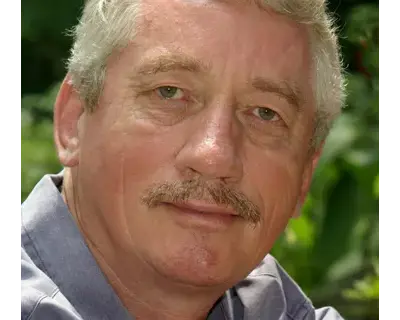
Franciscus Bernardus Maria "Frans" de Waal is a Dutch primatologist and ethologist. He is the Charles Howard Candler Professor of Primate Behavior in the Department of Psychology at Emory University in Atlanta, Georgia, director of the Living Links Center at the Yerkes National Primate Research Center at Emory, and author of numerous books including Chimpanzee Politics (1982) and Our Inner Ape (2005). His research centers on primate social behavior, including conflict resolution, cooperation, inequity aversion, and food-sharing. He is a member of the United States National Academy of Sciences and the Royal Netherlands Academy of Arts and Sciences.
