Lafcadio Hearn Quotes
The great principle of Western society is that competition rules here as it rules in everything else. The best man - that is to say, the strongest and cleverest - is likely to get the best woman, in the sense of the most beautiful person.
Hearn, Lafcadio. Interpretations of Literature. Edited by John Erskine, Dodd, Mead and Company, 1915.


Fisher, a brilliant scientist and mathematician, engaged in some major blunders like denying that tobacco had any relationship to lung cancer and other disease. This was another. His “conclusion” that the more “successful” members of society should breed in preference to the less successful. There are three major fallacies in his argument and that of other eugenics supporters other than the obvious ethical and moral problems. First, human success in any society is determined by both genetic and environmental factors. In general, it is currently impossible to know who the successful would be if environmental factors were equal. Second, our concept of success is quite narrow from an evolutionary point of view. The most successful humans might be those who produce that most children, or those who extend man’s habitat, or those who will be most resistant to a pandemic that will arise in the near future. Third, by the standards of much of English society at the time, the most “successful” people were the monarchy and heredity aristocracy, There was already too much inbreeding in these groups and increasing this groups breeding rather than others would not only weaken the species over time, but would limit the variation that is necessary for natural selection and further evolution of the human species.


She was also Australia’s First Woman Cabinet Minister.


Even today many people find Darwin’s views wanting because of the struggle and survival of the fittest concept implying that all creatures physically battle for survival and existance. But as this quotation illustrated, this was and is a very narrow view of Darwin’s concept of the struggle. Creatures fighting with each other is only a small part of this struggle. Larger parts are adapting to changed climate, versatility in food selection and extremely important a successful breeding pattern. The Thompson’s Gazelle is the most eaten animal on the African plains, and has virtually no defenses, but is an amazing breeder, with the shortest period of gestation of any mammal and the number of pregnancies per year. This little antelopes are thriving while they are eaten by most predators while the Lion, the strongest predator whom no animal will threaten, is becoming extinct.


This is the first use of the famous phrase—“survival of the fittest.” Spencer thought of it as a synonym for Darwin’s “natural selection”, but modern scientists do not use the phrase because it is circular reasoning. It is the fittest who survive it implies when whichever species survives is obviously fittest for that time and place. It is also misinterpreted as a predation scale war which it is not. The lion is much stronger than the antelopes and feeds on them, but the lions are dying out while the antelopes are thriving and developing. The fittest may be so because the species is a faster and more reliable breeder. Most people with a limited knowledge of evolution and scince associate the fittest with the top predator. However, over time, most top predators have NOT survived as well as many other species which in a predation fight are weak, but are more can handle a wider climate range, can change rapidly in response to natural disaters, can breed efficiently, are resistant to diseases, require less food, and literally thousands of other factors.
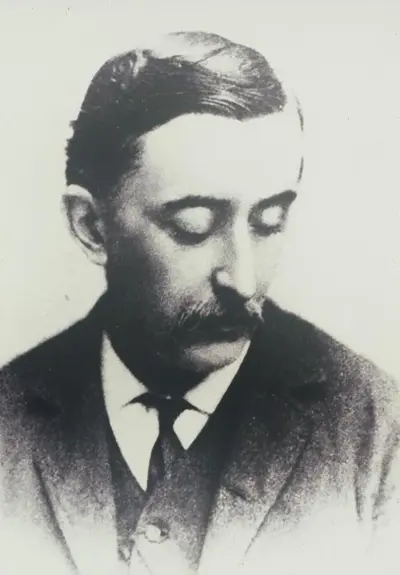
Koizumi Yakumo, born Patrick Lafcadio Hearn (/hɜːrn/; Greek: Πατρίκιος Λευκάδιος Χερν), was a Japanese writer of Greek-Irish descent. He is best remembered for his books about Japanese culture, especially his collections of legends and ghost stories, such as Kwaidan: Stories and Studies of Strange Things. In the United States, he is also known for his writings about New Orleans, based on his decade-long stay there.
