Charles Dickens Quotes
Man is but mortal: and there is a point beyond which human courage cannot extend. Mr. Pickwick gazed through his spectacles for an instant on the advancing mass, and then fairly turned his back and-we will not say fled; firstly, because it is an ignoble term, and, secondly, because Mr. Pickwick's figure was by no means adapted for that mode of retreat-he trotted away, at as quick a rate as his legs would convey him;.
Dickens, Charles. The Posthumous Papers of the Pickwick Club. Chapman and Hall, 1837.


Attila the Hun. If countries formed alliances against him, he took it as a sign of weakness and allies were cowards because they were afraid to fight alone.

The fear of nuclear war was a major emotion for most people in the world at the time. Hard liners like Goldwater were concerned that that fear would undermine support for greater nuclear development and deployment in America and maintaining opposition to nuclear test ban treaties that were under discussion. He made the mistake however of referring to the fear as “craven”, morally denigrating any American who might be in fear of nuclear war, which included just about everyone. So the Democrats took this quotation and used it in their battery of TV ads showing Goldwater as not only a hard liner, but one who had no empathy or understanding for a normal person who feared a nuclear conflict—one who was not to be trusted with the Presidency. Had Goldwater simply argued that legitimate and reasonable fear of nuclear conflict might make the nation too timid and perhaps inadvertently increase the likelihood of nuclear disaster by not standing up to the Russians, he may not have had the resentment from most people who thought Goldwater was calling their fears “craven”.


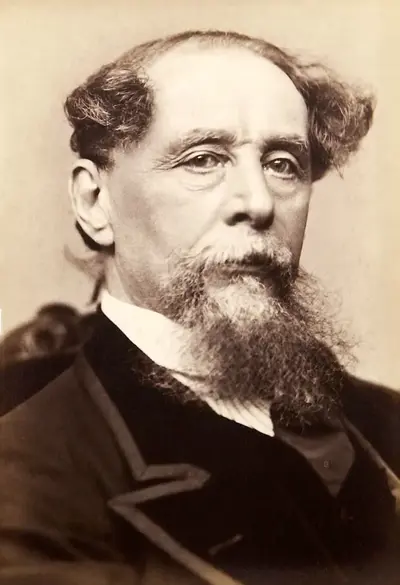
Charles John Huffam Dickens FRSA was an English writer and social critic. He created some of the world's best-known fictional characters and is regarded by many as the greatest novelist of the Victorian era. His works enjoyed unprecedented popularity during his lifetime and, by the 20th century, critics and scholars had recognised him as a literary genius. His novels and short stories are widely read today.
