Hugo Black Quotes
[Lobbying] has reached such a position of power that it threatens the government itself. Its size, its power, its capacity for evil; its greed, trickery, deception and fraud condemn it to the death it deserves.
Black was a Senator at the time.
Hugo Black, 1886-1971, U. S. Senator (Democrat, AL), U. S. Supreme Court Justice, Radio Address, 1935
Sourced by: Eigen's Political and Historical Quotations


He is not referring to campaign contributions but to actual cash bribes. Corporations and industry groups pay cash or provide goods and services to a politician in exchange for legislation favorable to the company or industry. Although his generalization about state officials being the most corrupt is generally probably correct, his state—Kentucky—is and has been one of the most corrupt in the country. See {623532} .


She was the first Black woman to be elected to Congress and was the first Black woman to actively campaign for the Presidency

Bryan had reached the point where he advocated public financing of campaigns.


Mises is one of the very few economic conservatives who opposed companies getting involved with lobbying or politics in any way. He, like some others, saw the negative public effect that business produces when it does get deeply involved in politics, but he uniquely observed that the businesses themselves suffered as a result of the involvement in politics. Obviously very few business leaders of the 21st century agreed with Mises’ earlier views.


In 1987 Toshiba Corporation of Japan illegally sold sophisticated technical equipment to the Russians. Congress was considering legislation that would punish Toshiba, but the proposed sanctions were softened:

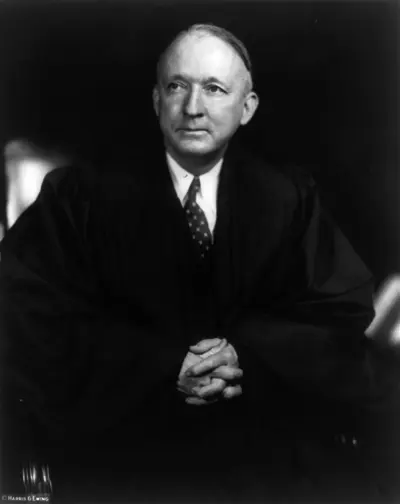
Hugo Lafayette Black was an American lawyer, politician, and jurist who served as a U.S. Senator from 1927 to 1937 and as an Associate Justice of the Supreme Court of the United States from 1937 to 1971. A member of the Democratic Party and a devoted New Dealer, Black endorsed Franklin D. Roosevelt in both the 1932 and 1936 presidential elections. Having gained a reputation in the Senate as a reformer, Black was nominated to the Supreme Court by President Roosevelt and confirmed by the Senate by a vote of 63 to 16 (six Democratic Senators and 10 Republican Senators voted against him). He was the first of nine Roosevelt appointees to the Court, and he outlasted all except for William O. Douglas.
