Thomas Moore Quotes
Like ships that have gone down at sea, when heaven was all tranquillity.
Moore, Thomas. "The Fire-Worshippers." Lalla Rookh: An Oriental Romance. Longman, Hurst, Rees, Orme, and Brown, 1817, p. 189.


Traffic fatalities had been growing ever since the production of the automobile. See Stalin {616657} for another statement about large numbers of deaths. Today, for example, the death of 3 American soldiers in a day produces page one news. An airplane crash that kills 10 people will dominate the news, while on that same day 117 Americans will have been killed in automobile traffic deaths “diffused in time and space”.


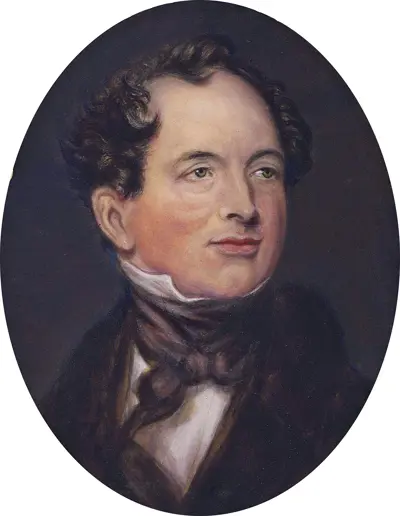
Thomas Moore was an Irish writer, poet and lyricist celebrated for his Irish Melodies. Their setting of English-language verse to old Irish tunes marked the transition in popular Irish culture from Irish to English. Politically, Moore was recognised in England as a press, or "squib", writer for the aristocratic Whigs; in Ireland he was accounted a Catholic patriot. Married to a Protestant actress and hailed as "Anacreon Moore" after the classical Greek composer of drinking songs and erotic verse, Moore did not profess religious piety. Yet in the controversies that surrounded Catholic Emancipation Moore was seen to defend the tradition of the Church in Ireland against both evangelising Protestants and uncompromising lay Catholics. Longer prose works reveal more radical sympathies. The Life and Death of Lord Edward Fitzgerald depicts the United Irish leader as a martyr in the cause of democratic reform. Complementing Maria Edgeworth's Castle Rackrent, Memoirs of Captain Rock is a saga, not of Anglo-Irish landowners, but of their exhausted tenants driven to the semi-insurrection of "Whiteboyism". Today, however, Moore is remembered almost alone either for his Irish Melodies (typically "The Minstrel Boy" and "The Last Rose of Summer") or, less generously, for the role he is thought to have played in the loss of the memoirs of his friend Lord Byron.
