Calvin Coolidge Quotes
If the death and disaster that now fall upon innocent people through the year and over our country as a whole were concentrated into one calamity, we would shudder at the tremendous catastrophe. The loss is no less disastrous because diffused in time and space.
Traffic fatalities had been growing ever since the production of the automobile. See Stalin {616657} for another statement about large numbers of deaths. Today, for example, the death of 3 American soldiers in a day produces page one news. An airplane crash that kills 10 people will dominate the news, while on that same day 117 Americans will have been killed in automobile traffic deaths “diffused in time and space”.
Calvin Coolidge, 1872-1933, 30th President of the United States (Republican, MA), Speech to delegates to the National Conference on Street and Highway Safety, December 1924
Sourced by: Eigen's Political and Historical Quotations

{627488} is an earlier quotation by a French Diplomat of very similar sentiment, but it is not known if Stalin had ever seen it. Also See Beilby Porteus {627489} for an 18th century variation. This is a puzzling phenomenon. In the United States if there is a plane crash and a hundred people are killed, it is page one and television lead news. But between 40,000 and 50,000 Americans die each year, one or two at a time in auto crashes, and it does not seem to be news. More American college students commit suicide (about 1200 a year) then are killed in mining or other industrial accidents, but the former we rarely hear about.


Milosevic was explaining the events that led to civil war in Yugoslavia


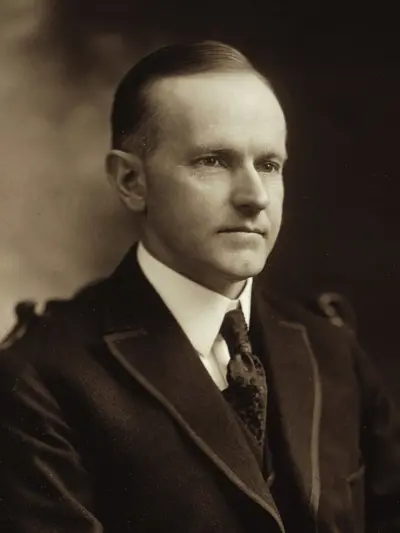
- Born: July 4, 1872
- Died: January 5, 1933
- Nationality: American
- Profession: President
Calvin Coolidge was an American lawyer and politician who served as the 30th president of the United States from 1923 to 1929. A Republican lawyer from New England, born in Vermont, Coolidge worked his way up the ladder of Massachusetts state politics, eventually becoming governor of Massachusetts. His response to the Boston Police Strike of 1919 thrust him into the national spotlight and gave him a reputation as a man of decisive action. The next year, he was elected the 29th vice president of the United States, and he succeeded to the presidency upon the sudden death of Warren G. Harding in 1923. Elected in his own right in 1924, he gained a reputation as a small-government conservative and also as a man who said very little and had a rather dry sense of humor.
