Edward Conard Quotes
Let's not kid ourselves about just how cheap offshore labor really is. We not only pay substantially less per hour: we also avoid the costs we would incur if these workers immigrated here. We don't pay for their medical expenses when they show up in the emergency room without insurance.
Conard, Edward. Unintended Consequences: Why Everything You've Been Told About the Economy Is Wrong. Portfolio/Penguin, 2012, p. 182.


Sinclair had written an expose of the meat packing industry – the Jungle – which used as its setting the Armour meat packing factory. It changed the way the public thought about the industry, the role of government and regulation. President Roosevelt took up the reform role, and got Congress to Regulate the quality and cleanliness of the meat packing industry. Sinclair, however not only wanted that reform, but also wanted the labor wages and conditions reformed. He referred to the Armour plant as the fortress.

Fallows was contrasting the benefit that offshore manufacturing brought many Americans in addition to the damage to the Americans who lost their jobs to Chinese manufacturing workers. The complexity was that the offshoring of manufacturing does damage to many American blue collar but benefits white collar workers.

Debs had unconstitutionally been arrested and jailed for opposing American entry into World War I. He was later pardoned by President Warren G. Harding.

This practice which was considered immoral, unethical, and harmful to society in 1938 was considered sound business 60 years later with globalization. In 1938 a minority of Americans argued that the practice was desirable; in 1998 a minority thought that the practice was harmful.


At the time, the NYC subway was operated by a private companies. Quill worked for the largest, the Interboro Rapid Transit Company. Quill organized the workers and forced major changes in the system.


It is interesting that the first national women’s political party was a strong advocate of protectionism and saw free trade as an unfair hurdle for mostly male workers. At the time, the Republicans were staunch protectionists, and the Democrats, the free traders thus illustrating that the major parties continuously flip-flop on major issues.


Indian and Black slaves were outlawed very early in Connecticut, not on moral grounds of concern for the Indians and Blacks, but because of the negative effects on the white poor. Why would anyone pay the poor any more than the amortization costs of a slave? Therefore there was no way a poor white could make a living wage if slavery were to coexist.

At the time, Australia would not allow Asians in the Country and the United States had severely curtailed Oriental immigration. Ironically, in the 21st century the United States and most of the “white” nations had opened their markets to Asian imports and China, Taiwan, Korea, Thailand all were dominating consumer manufacturing and were in free competition with white labor but there were still de facto restrictions on immigration and Asian guest workers in most white nations.

The first non-PRI President in over 70 years. This racist remark caused a furor in America producing demands for an apology which were rebuffed although he stated that he regrets the misinterpretation.

At the time this was generally true for most businesses. However, in a modern economy, there are other ways. Increasing volume, automation, innovating products and services to get premium prices naw are standard techniques.
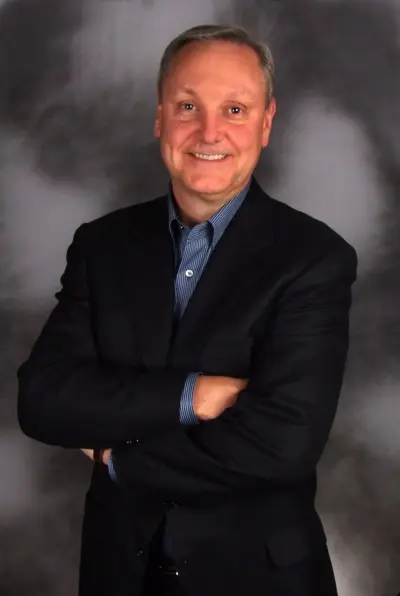
Edward W. Conard is an American businessman, author and scholar. He is the New York Times bestselling author of The Upside of Inequality: How Good Intentions Undermine the Middle Class and Unintended Consequences: Why Everything You've Been Told About the Economy Is Wrong; and a contributor to Oxford University Press’ United States Income, Wealth, Consumption, and Inequality. Conard is an adjunct fellow at the American Enterprise Institute for Public Policy Research. Previously, he was a managing director at Bain Capital, where he worked closely with former presidential candidate Mitt Romney.
