Denis Kearney Quotes
A bloated aristocracy rakes the slums of Asia to find the meanest slave on earth—the Chinese coolie—and imports him here to meet the free American in the labor market and further widen the breach between the rich and the poor, still further to degrade white labor.
Of particular interest is his point about the immigration of cheap, foreign labor in addition to presenting unfair competition to the American worker also regards him in society’s view and his own. It was a tremendous loss of dignity for now a free working man was no better than an ignorant, compliant Chinese coolie. This loss of dignity has been a problem to which politicians have not been very sensitive.
Denis Kearney Quoted in Michael Kazin, Trump and American Populism Foreign Affairs. November/December 2016 Volume 95, Number 6
Sourced by: Eigen's Political and Historical Quotations


Sinclair had written an expose of the meat packing industry – the Jungle – which used as its setting the Armour meat packing factory. It changed the way the public thought about the industry, the role of government and regulation. President Roosevelt took up the reform role, and got Congress to Regulate the quality and cleanliness of the meat packing industry. Sinclair, however not only wanted that reform, but also wanted the labor wages and conditions reformed. He referred to the Armour plant as the fortress.

The doctrine of the Southern Cotton industry before the Civil War was that Capital should not only use labor and control labor, but that in true capitalism, Capital should own labor—slavery. This Southern hostility towards labor rights and organized labor was derived from this extremist view of capitalism.


In his economic view, managers, accountants, attorneys, owners, shareholders, landlords, were all supported by the workers who have to support themselves and all the others.


The Supreme Court had ruled that there could be no limits placed on the amount of money that could be spent by a rich company or person to campaign for a candidate. It would deny them their right to freedom of speech. That was the context of Hollings’ remark.
Most of us think the California was not a slave state, but in the early 1850s the California law (such as it was) allowed a slave owner to “sojourn” in California with his property that could include slaves. A number of Southern save owners took slaves to the California gold fields to do mining. There was a great deal of resentment on the part of the other miners and the free labor of the territory. In 1855, slavery in California was abolished.

The first non-PRI President in over 70 years. This racist remark caused a furor in America producing demands for an apology which were rebuffed although he stated that he regrets the misinterpretation.

The “competition of the poor included the political and social activism competition.”


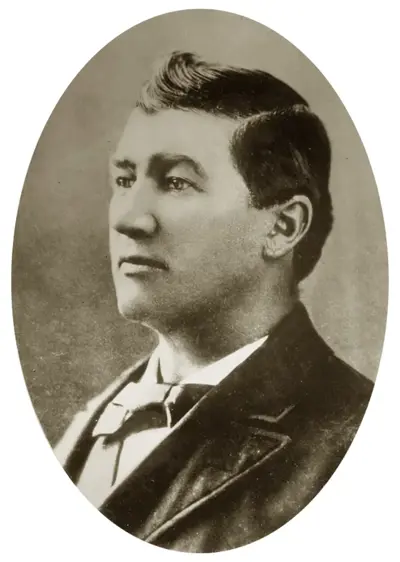
Denis Kearney (1847–1907) was a California labor leader from Ireland who was active in the late 19th century and was known for his racist views about Chinese immigrants. Called "a demagogue of extraordinary power," he frequently gave long and caustic speeches that focused on four general topics: contempt for the press, for capitalists, for politicians, and for Chinese immigrants. A leader of the Workingmen's Party of California, he is known for ending all of his speeches with the sentence "And whatever happens, the Chinese must go" (a conscious inspiration from Roman senator Cato the Elder's fame for ending all speeches with ceterum autem censeo Carthaginem esse delendam - "Furthermore, I consider that Carthage must be destroyed".)
