John Law Quotes
Let's call down God's power on the media.
The cardinal was distressed that the media had carried stories of priests who were pediphiles.
John Law, Catholic Cardinal of Boston, Sermon, Quoted on ABC Primetime Live, July 2, 1992
Sourced by: Eigen's Political and Historical Quotations

Ailes suggested plan was not implemented by President Nixon. However. Ailes, an arch conservative who has always believed the media was biased against conservatism, later implemented his idea very successfully. This idea was the intellectual forerunner" to Fox News, which Ailes launched as a "fair and balanced" news network in 1996. The Nixon Administration however, concerned about the extremes of many of his recommendations finally fired him, which turned out to be very positive for Ailes career thereafter.


This was her response to Sander Vanocur {618913}


Agree had resigned from the CIA in protest to its political positions.

Tweed was the powerful boss of New York City’s corrupt political machine—Tammany Hall. The newspapers had been attacking Tweed and Tammany Hall for several years but they never resonated with the public. The cartoons of Thomas Nast however were not only understood by illiterates, but the cartoons caused an emotional reaction against Weed and his organization which led to their downfall.


Vladimir Lenin. Lenin was echoing criticisms that were made the world over and even by some in the United States. However, his solution to have the press controlled by the ruling party just changed the cast of characters who were propagandizing and distorting the truth. Lenin was not able to offer a better solution nor were others. However, with enough affluence the capitalist society produced enough different publishers all competing that one did not dominate public opinion. With technology of TV and the Internet, the bar to entry is so small that almost anyone can be a publisher and find an interested market. In a way technology has solved much of the problem for capitalistic and totalitarian societies alike. In the latter, even censorship is not easy or feasible on a large scale.

The queen was a lot more sophisticated about the newspapers than politicians in the 21st century.


Stalin was very astute in realizing the power of the press and the modern media. As a result, his solution was to not only develop a strong party media apparatus, but deny any contrary groups the fight to press and media. He was so effective at media control that most dictators and theocrats would thereafter model the Russian system of monopoly control over the media.


Those who dumb down the news, trivialize the news with in-studio shouting matches passing for debate
It is expensive to pay journalists to investigate and record the news. It is very inexpensive to put two political protagonists at a table with a moderator, and allow them to shout at each other for the duration of the program.

Since so many politicians have lied to the public and the press, denials, the press is very suspicious of any denials. In this particular case they were concerned that this denial is stated in the present, but is not a denial about the past including the recent past. So they continued to press him.
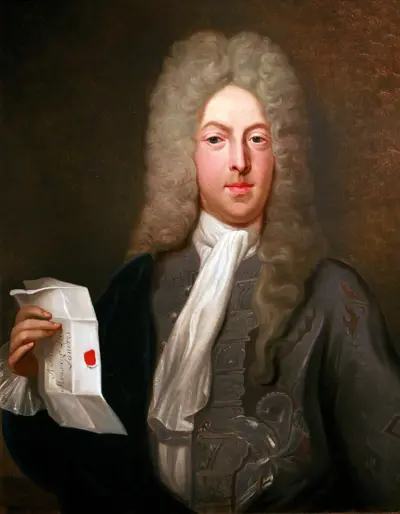
John Law was a Scottish economist who distinguished money, a means of exchange, from national wealth dependent on trade. He served as Controller General of Finances under the Duke of Orleans, who was regent for the juvenile Louis XV of France. In 1716, Law set up a private Banque Générale in France. A year later it was nationalised at his request and renamed as Banque Royale. The private bank had been funded mainly by John Law and Louis XV; three-quarters of its capital consisted of government bills and government-accepted notes, effectively making it the nation's first central bank. Backed only partially by silver, it was a fractional reserve bank. Law also set up and directed the Mississippi Company, funded by the Banque Royale. Its chaotic collapse has been compared to the 17th-century tulip mania in Holland. The Mississippi bubble coincided with the South Sea bubble in England, which allegedly took ideas from it. Law as a gambler would win card games by mentally calculating odds. He originated ideas such as the scarcity theory of value and the real bills doctrine. He held that money creation stimulated an economy, paper money was preferable to metal, and dividend-paying shares a superior form of money. The term "millionaire" was coined for beneficiaries of Law's scheme.
