John Dickinson Quotes
Let these truths be indelibly impressed on our minds — that we cannot be happy, without being FREE — that we cannot be free, without being secure in our property— that we cannot be secure in our property, if, without our consent, others may, as by right, take it away — that taxes imposed on us by parliament, do thus take it away.
Dickinson, John. Letters from a Farmer in Pennsylvania to the Inhabitants of the British Colonies. William and Thomas Bradford, 1768, p. 71.


This was written and adopted by Vermont a decade before the United States Constitution the ideas for which were in existence in America before the Constitutional Convention in Philadelphia.

The arbitrary tax that Britain had imposed in tea in America was protested, not only in Boston. This meeting and its report was held the day before the Boston Tea Party. There was concern and distress in many parts of the colonies.
Hopkins was complaining about the fact that England could tax the colonies and thereby take their property without their consent made the American colonists in the “miserable condition of slaves.” Essentially the fundamental complaint of the Americans was this and in a decade it would erupt as the American Revolution. At the same time, Hopkins was a slave owner and yet saw nothing wrong with that.


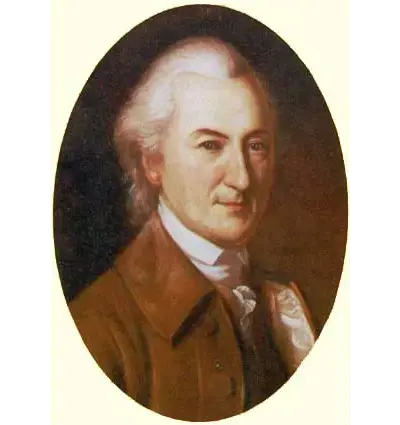
John Dickinson, a Founding Father of the United States, was a solicitor and politician from Philadelphia, Pennsylvania, and Wilmington, Delaware, known as the "Penman of the Revolution" for his twelve Letters from a Farmer in Pennsylvania, published individually in 1767 and 1768. As a member of the First Continental Congress, where he was a signee to the Continental Association, Dickinson drafted most of the 1774 Petition to the King, and then, as a member of the Second Continental Congress, wrote the 1775 Olive Branch Petition. When these two attempts to negotiate with King George III of Great Britain failed, Dickinson reworked Thomas Jefferson's language and wrote the final draft of the 1775 Declaration of the Causes and Necessity of Taking Up Arms. When Congress then decided to seek independence from Great Britain, Dickinson served on the committee that wrote the Model Treaty, and then wrote the first draft of the 1776–1777 Articles of Confederation and Perpetual Union.
