Manu Quotes
Let him not strike one who in flight has climbed on an eminence, nor a eunuch, nor one who joins the palms of his hands in supplication, nor one who flees with flying hair, nor one who sits down, nor one who says 'I am thine;' Nor one who sleeps, nor one who has lost his coat of mail, nor one who is naked, nor one who is disarmed, nor one who looks on without taking part in the fight, nor one who is fighting with another foe; Nor one whose weapons are broken, nor one afflicted with sorrow, nor one who has been grievously wounded, nor one who is in fear, nor one who has turned to flight.
Manava Dharma Shastra. The Hindu religion had its own form of “Geneva Convention.” This text is a part of the Hindu Holy Texts. Hindus believe that Manu was a prophet whose text is revealed or inspired.
Manu, ~ 500 BC, Hindu Teacher from India, Laws of Manu
Sourced by: Eigen's Political and Historical Quotations

This stricture would seem to prohibit the suicide bomber and other terrorists who kill civilians. However, the terrorists and those who support them observe that this quotation is not from the Koran and other passages of the Koran override this instruction in many contexts. Most American Muslims hold with this view of the Prophet’s and morally oppose indiscriminate terrorism in all cases. This volume roughly is to Islam what the Gospels are to Christianity. To most Muslims The Sunnah is a collection of holy material on the life of Mohammed. It is not of the force or importance as the Koran, but it is revered.

Enemy captives were sometimes adopted by Indian families to replace a lost loved one.


In 1920 Germany was in the throes of revolution. A mob, including many soldiers had occupied Berlin and the Government ordered the General to oust them. He refused, with this famous quote


Attila the Hun. If countries formed alliances against him, he took it as a sign of weakness and allies were cowards because they were afraid to fight alone.

In 1991 Bush’s father, and his military and security advisors, after winning an overwhelming victory and accomplishing the war aims stated of rolling back the Iraqi aggression, decided that it was not worth the loss of American and Iraqi lives to try and occupy Bagdad and change the regime. America and its large coalition withdrew in victory having restored the pre-aggression status quo. The son and some of the right wing and neo conservatives always saw that strategy as a mistake and this quotation is often cited as showing this psychological animus to that decision of his father. His use of the term “cut and run” which implies defeat and some lack of courage is surprising to some as America and the coalition did anything but run as they had killed and destroyed far more or the Iraqi military power than the son’s later war did. It was a withdrawal and there were critics at the time, but no one accused the elder Bush of “cut and run” except that is the way the son obviously saw it.

Shelly was a reformer and admired Jesus Christ and his preaching. However, he was an opponent of organized religion and was an atheist himself.

He was arguing that even if torture might provide useful intelligence not otherwise obtainable, it is not necessary in order for us to succeed in our objectives. Ironically, the military interrogation rules prohibited torture in conformity with US law and treaties but the CIA ignored those restrictions and secretly tortured a number of victims in the War on Terror until their actions became public and they too were required, by executive order to follow the military interrogation guidelines.


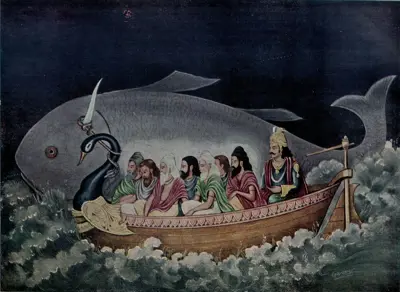
Manu (Sanskrit: मनु) is a term found with various meanings in Hinduism. In early texts, it refers to the archetypal man, or to the first man (progenitor of humanity). The Sanskrit term for 'human', मानव (IAST: mānava) means 'of Manu' or 'children of Manu'. In later texts, Manu is the title or name of fourteen mystical Kshatriya rulers of earth, or alternatively as the head of mythical dynasties that begin with each cyclic kalpa (aeon) when the universe is born anew. The title of the text Manusmriti uses this term as a prefix, but refers to the first Manu – Svayambhuva, the spiritual son of Brahma.
