Mark Twain Quotes
Laws can be evaded and punishment escaped, but an openly transgressed custom brings sure punishment.
Samuel Langhorne Clemens, 1835-1910
Mark Twain, Writer, Founder, Anti-Imperialist League, Mark Twain, a Biography
Sourced by: Eigen's Political and Historical Quotations

For earlier similar sentiments see Plato and William D'Avenant {312586}.


Spinoza was one of the most feared intellectuals in human history—feared, that is, by the established power structures. Spinoza’s ideas were considered so radical and dangerous that he was the only man in history who was excommunicated by the Catholics, the Jews and the Muslims.

See Saint Ambrose {593184} for an earlier expression of this general principle.

The South had a tradition of lynching even before Reconstructon. Southern Leaders like Jefferson encouraged and justified the heinous practice. In the West there was a good bit of vigilantism justified by the fact that there was no functioning legal system and few law enforcement officers. But Jefferson and many other Southerners, although there was a law enforcement system except in the most rural areas, advocated lynching as a combination of vengeance and other emotions that are hard to identify.


Conformity--the natural instinct to passively yield to that vague something recognized as authority.
Samuel Langhorne Clemens, 1835-1910
Samuel Langhorne Clemens, 1835-1910


He and his brother are the largest political contributors in the United States, so they have enormous influence on Republicans (they only make political contributions to conservative organizations).

Conversations about pollution and environmental safety


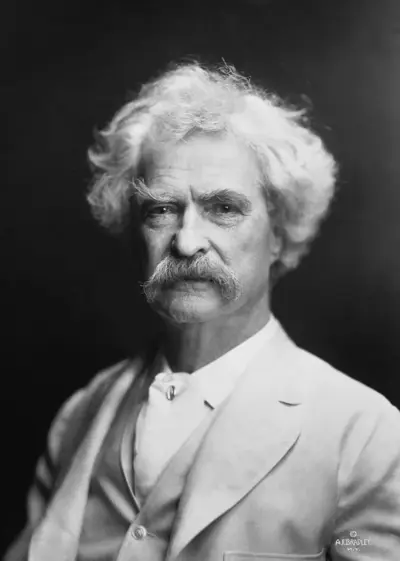
Samuel Langhorne Clemens, known by his pen name Mark Twain, was an American writer, humorist, entrepreneur, publisher, and lecturer. He was lauded as the "greatest humorist the United States has produced," and William Faulkner called him "the father of American literature". His novels include The Adventures of Tom Sawyer (1876) and its sequel, the Adventures of Huckleberry Finn (1884), the latter often called "The Great American Novel".
