Jakaya Kikwete Quotes
Land ownership has never been a problem. People have access to land. The peasants cannot complain about land ownership.
Kikwete, Jakaya. Panel Discussion. World Economic Forum on Africa, World Economic Forum, 6 May 2010.

In every society where there had been past unjust ownership of land, all efforts of land reform were faced with the problem of having to dispossess the current “owners” who themselves had not been guilty of the crimes of their ancestors in unjustly obtaining the land originally. In America land reform was unworkable in most cases and the solution was usually a large monetary payment as compensation for the land.


His bill introduced in the House of Representatives. It did not pass.
Nelson was referring to the past. The industrial revolution created other forms of wealth and power as a huge factory could be built on a small piece of land. In farming, the yield is proportional to the acreage tilled. Not so in manufacturing. With the knowledge era, intellectual property could produce much wealth and power, and factory size and land ownership was not necessary.


The Romans were very organized regarding land ownership. When they conquered Africa, defeating Carthage, they found no written records of land ownership, no deeds, no bills of sale. Therefore, they opened up the entire land mass of Africa for what amounted to public colonization where the land could be worked and claimed legally. Illiterate Africans had no written records, and most areas where under the control of a strongman who “owned” all of the land with no notion of private ownership of land.


In Burundi, family land is divided among the male children of a family. The average Burundian woman has 6.3 children at that time, nearly triple the international fertility rate. With this population growth rate, the plots of land for each person inevitably get smaller and smaller over time. At 10,745 square miles, Burundi is slightly smaller than the U.S. state of Maryland, but it holds nearly twice as many people: about 10 million. The small plots of land are inefficient to farm and provide subsistence. So the nation was in a crises as there was little industrialization and land was essential for existence for most Burundians. See {35807} and {35808}.

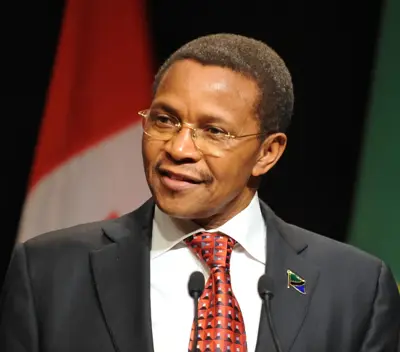
Jakaya Mrisho Kikwete is a Tanzanian politician who was the fourth president of Tanzania, in office from 2005 to 2015. Prior to his election as president, he was the Minister for Foreign Affairs from 1995 to 2005 under his predecessor, Benjamin Mkapa. He also served as the chairperson of the African Union from 2008–2009 and the chairman of the Southern African Development Community Troika on Peace, Defence and Security from 2012–2013.
