Wole Soyinka Quotes
Some of the greatest uprisings and consequent civil wars in Mexico have centered squarely on the ownership of land.
Soyinka, Wole. Conversations with Wole Soyinka. Edited by Biodun Jeyifo, University Press of Mississippi, 2001.


In every society where there had been past unjust ownership of land, all efforts of land reform were faced with the problem of having to dispossess the current “owners” who themselves had not been guilty of the crimes of their ancestors in unjustly obtaining the land originally. In America land reform was unworkable in most cases and the solution was usually a large monetary payment as compensation for the land.


In the history of America


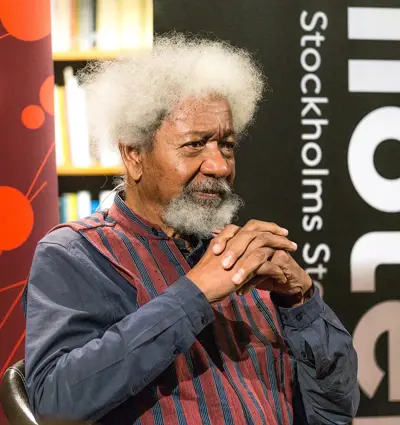
Akinwande Oluwole Babatunde Soyinka, known as Wole Soyinka (pronounced [wɔlé ʃójĩnká]), is a Nigerian playwright, novelist, poet, and essayist in the English language. He was awarded the 1986 Nobel Prize in Literature, the first sub-Saharan African to be honoured in that category. Soyinka was born into a Yoruba family in Abeokuta. In 1954, he attended Government College in Ibadan, and subsequently University College Ibadan and the University of Leeds in England. After studying in Nigeria and the UK, he worked with the Royal Court Theatre in London. He went on to write plays that were produced in both countries, in theatres and on radio. He took an active role in Nigeria's political history and its struggle for independence from Great Britain. In 1965, he seized the Western Nigeria Broadcasting Service studio and broadcast a demand for the cancellation of the Western Nigeria Regional Elections. In 1967, during the Nigerian Civil War, he was arrested by the federal government of General Yakubu Gowon and put in solitary confinement for two years.
