Charles Dickens Quotes
Keep out of Chancery [English court] .... It's being ground to bits in a slow mill; it's being roasted at a slow fire; it's being stung to death by single bees; it's being drowned by drops; it's going mad by grains.
Charles Dickens, 1812-1890, English Writer, Bleak House, 1852
Sourced by: Eigen's Political and Historical Quotations


Some democratic cultures are very distrustful of government bureaucracies and prefer to resolve conflicts through the courts where the process in in general much more transparent. The U. S. is not the only example. Israel is even more litigious.


Second Earl of Buckinghampshire. For a substantial portion of the English rule over Ireland, the post of Viceroy and Lord Lieutenant were particularly difficult and often undesirable posts.

Americans are divided as to whether this should be encouraged and helped or not.

Referring to civil rights suits during the Reagan administration:

Manava Dharma Shastra. Here is a type of Freedom of Information Act in Ancient India. This text is a part of the Hindu Holy Texts. Hindus believe that Manu was a prophet whose text is revealed or inspired.

Sealed under duress and later repudiated by the King with Papal assistance. Prior to Magna Carta, anyone with a civil suit had to take his case to the King's court which moved about as the King traveled. This set the precedent of a fixed court for a jurisdiction, something we totally take for granted today." John Lackland


He was reacting to the fact that in the George W. Bush administration, they found a few lawyers in the Justice Department that they put into key positions and they wrote legal opinions stating that many commonly used forms of torture were not torture and therefore were legal. Of course the legal opinion was secret so other lawyers could not fault it, and the CIA actually used that as justification for the torture of some of the enemy combatants in the War on Terror.


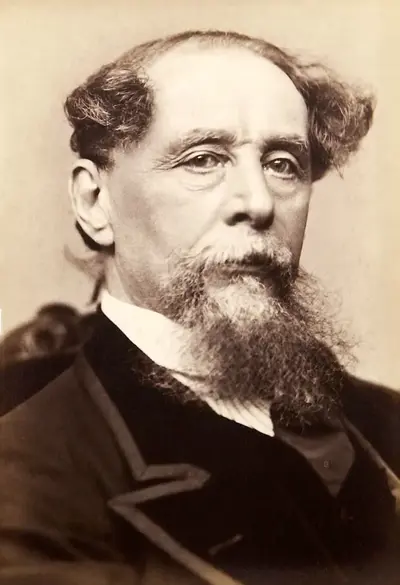
Charles John Huffam Dickens FRSA was an English writer and social critic. He created some of the world's best-known fictional characters and is regarded by many as the greatest novelist of the Victorian era. His works enjoyed unprecedented popularity during his lifetime and, by the 20th century, critics and scholars had recognised him as a literary genius. His novels and short stories are widely read today.
