Joseph Stiglitz Quotes
I've always been sceptical about the notion that the market is a person you can engage in an argument with, and that that person is an intelligent, rational, well-intentioned person: it is fantasy. We know that ... the market is subject to irrational optimism and pessimism, and is vindictive ... You're dealing with a crazy man ... Having got what he wants he will still kill you.
Stiglitz, Joseph E. Freefall: America, Free Markets, and the Sinking of the World Economy. W. W. Norton & Company, 2010.


He distressed most of the other stock brokers on Wall Street by pointing out that if brokers were so smart, why would they not want to buy the stock for themselves rather than sell it to you. Therefore, he generally concluded that the best stocks are bought by the brokers and bankers for their own accounts, and the lesser quality shares are sold to the public.


This quote is misattributed to Keynes. The first recorded version of this was a 1986 presentation given by Gary Shilling, an influential financial advisor twice named Wall Street’s top economist in a poll conducted by Institutional Investor magazine, as reported by The Advertiser newspaper of Montgomery, Alabama. The next recorded evidence is a Forbes article by Shilling in February, 1993. See linked quote.


Jobs led Apple when it became the technology company with the largest stock market valuation ever, yet he freely admitted that he did bit understand the market. He just ran a great company which produced wonderful, innovative products and paid relatively little attention to the stock market and Wall Street.
The Meltdown of 2008 came a year later and Citigroup, one of the largest banks in America, had massive liquidity problems and in order to stave off bankruptcy the taxpayers had to come up with $45 Billion. The bank executives, as this quotation demonstrates, knew that they were in a very risky situation and that if the subprime mortgages started to default, the “music would stop” and they and the other banks would have a massive liquidity problem. None the less, they kept on investing more and more of their bank customer’s money and making money in what they knew was a highly risky enterprise. The greed clouded their judgment and when the music stopped and many were no longer dancing, the Meltdown of 2008 almost destroyed the entire national economy and triggered the Great Recession where the overwhelming proportion of Americans had to suffer for the greed of those who could not “stop dancing” even as they knew it was very dangerous.

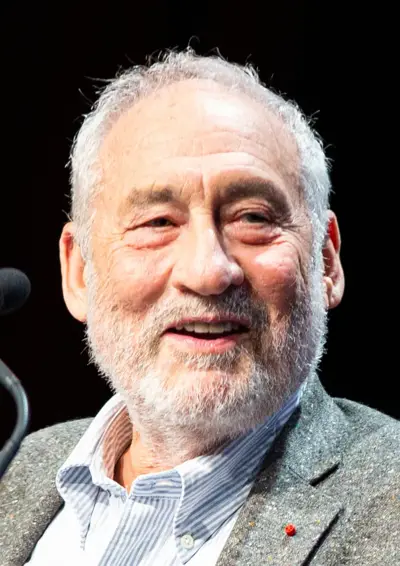
Joseph Eugene Stiglitz is an American economist, public policy analyst, and a professor at Columbia University. He is a recipient of the Nobel Memorial Prize in Economic Sciences (2001) and the John Bates Clark Medal (1979). He is a former senior vice president and chief economist of the World Bank and is a former member and chairman of the (US president's) Council of Economic Advisers. He is known for his support of Georgist public finance theory and for his critical view of the management of globalization, of laissez-faire economists (whom he calls "free-market fundamentalists"), and of international institutions such as the International Monetary Fund and the World Bank.
