John Fiske Quotes
It would be hard to overrate the debt which mankind owes to Calvin. The spiritual father of Coligny, of William the Silent, and of Cromwell, must occupy a foremost rank among the champions of modern democracy as one of the longest steps that mankind has ever taken toward personal freedom.
“Coligny” was Gaspard de Coligny, 1519–1572, the Huguenot fonder. “William the Silent” was William of Orange the main leader of the Dutch revolt against the Spanish, and Cromwell was the leader of the English revolution. All three were major figures in advancing the concept of individual freedom of the ordinary man and all three were profoundly influences by John Calvin.
John Fiske, 1842–1901, Historian & Philosopher, Quoted in Kevin Phillips, 1775: A Good Year For Revolution
Sourced by: Eigen's Political and Historical Quotations


1st Baron Macaulay


Martin Luther not only reformed Christianity but was a catalyst for many religious Christian alternatives thereby ending monolithic worldwide Christian religious doctrine and control. He argues that Islam must have a similar reform process.


The choice of non-capitalization of the word “god” was Jefferson’s and is retained herein. This quotation is one of the most important in American history because it set the boundary for when it was proper for government to legislate personal behavior. For Jefferson, legislation was only justified if the behavior damged other people economically or physicly. Moral, religious, ethical or cultural affects were not sufficient to interfere with other people's freedom. The quotation was initially given to argue against a state etablished church and blasphemy laws and has been used in arguments even into the 21st century debate over gay marriage.


The Senate was presented with James Madison’s Language for the First Amendment. These three alternatives were proposed and rejected. The rejected versions turn out to have been very important. Some have argued that the First Amendment does not prohibit Congress making laws regarding religion as long as it doesn’t favor one religion over another—for example pay for clerics of all religions. However, that was the third proposal and it was rejected in favor of the high wall of separation proposed by Madison.
Note the absolutism of the word unbounded.

Ironically, without the word “wicked” most people would regard the first sentence as a good description of elements of a modern democracy. It illustrates that for the Islamic fundamentalist democracy substitutes the rule of man for the rule of God, freedom of speech allows heresy and blasphemy to to uttered and communicated, and religion which is supposed to inform and direct politics. So what is good for the lover of democracy is the very thing that is bad for Islam. This is not a uniquely Islamic viewpoint. It has been and is held by fundamentalist Christians and Jews as well who would return to Biblical law punishing blasphemy and heresy with death and have religion drive all politics.
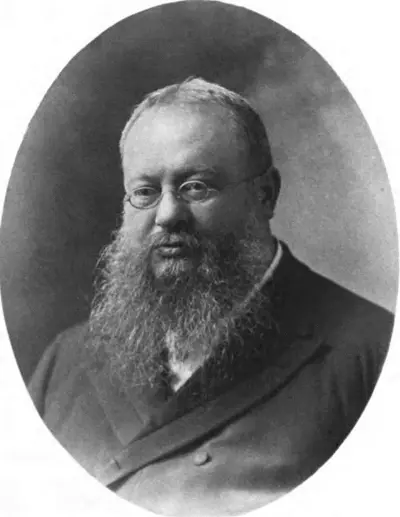
John Fiske was an American philosopher and historian.
