Edward Grey Quotes
it would be a disgrace for us to make this bargain with Germany at the expense of France - a disgrace from which the good name of this country would never recover.
The Germans wanted to make a deal with Britain to remain neutral while Germany attacked and conquered France’s colonies. In their view England and Germany would share the dominance of the world. The British would not sell out the French with whom they had a treaty, and WWI began.
Edward Grey [Viscount Fallodon], 1862-1933, British Foreign Secretary (Liberal), Letter to Sir E. Goschen, British Ambassador to Germany, July 30, 1914
Sourced by: Eigen's Political and Historical Quotations


This was very much a minority opinion at the time, and has much historical significance as he was the father of the British Prime Minister, Neville Chamberlain, 1869-1940, whose appeasement of Germany led to Word War II. . See {585941}.

He was shot as a traitor when de Gaulle returned. See {587231} and {587230}.


In a NATO military operation, there is one NATO Supreme Commander but each nation has a minister for NATO. All significant decisions must be consented to be this group. But each of those is a representative of a different political government. Clark was masterful at this diplomatic side of the war just as Dwight Eisenhower was in WWII. Eisenhower had bigger egos to content with—Churchill, Roosevelt, Stalin, De Gaulle, but Clark had many more counties who could each veto actions.

This dictum has driven blood feuds that have lasted over 200 years. It has also made governance and diplomacy in Northern Albania very difficult.

Already receiving tribute for American immunity from the Barbary pirates, the Bey (provincial governor) added a provision to the tribute treaty requiring the Americans to give a barrel of gunpowder for every cannon shot fired in salute of arriving American ships. The American consuls objected saying it insulted their country’s honor:

and later wife. Stevenson is describing the German foreign minister’s behavior at Versailles and Lloyd George’s angry reaction.

The two were cousins. Wilhelm was a very dominant personality and his cousin quite weak. This quotation shows the egomaniacal view of the German Kaiser. The letters were secret but after the execution of the Czar, the Russians released the letters to show the dominant and warlike history of Germany under the Kaiser who was furious that the Russians had made such personal and secret letters public.


He was exactly right. Two decades later Germany had started WWII.
They were both children of Queen Victoria of England.

Vladimir Lenin


The existing treaties of many of the different European countries like the NATO Treaty obliged them to assist their allies if they were involved in war. Once Austria attacked Serbia, Russia had to assist Serbia against Austria. Germany then joined with Austria and that triggered the treaty whereby France had to support Russia. And when Germany overran Belgium to attack France, England was obligated to come to Belgium’s defense. The only country that had planned for and wanted war was Germany who used her obligation to Austria as the excuse to implement her war plans (see {642092}). The entire Western World was at war when all but one nation wanted to avoid war. The communications and diplomacy of the time could not keep up with events and one of the worst wars in history ensued.

The “proofs” were diplomatic assurances—treaties—that England would guarantee the territorial integrity of Belgium. The British made strong diplomatic efforts to persuade Germany not to occupy Belgium. The German’s none the less send armies in under the excuse that if they did not, the French would occupy the country and have a strategic advantage over them. Diplomacy could do no more good. England had to send troops or renege on its obligations. So England was in WWI.
England is entering the war against Germany The German war plan called for attacking France through Belgium. However, Belgium was intent on remaining neutral. International law prohibited a neutral country from allowing troops of either side to enter and maneuver in its territory. ({642178}). When Germany moved into Belgium, the Belgians resisted. England had a treaty with Belgium that it would protect Belgian neutrality in the event of any war in Europe. England then sided with Belgium {642175} and committed to send troops to help Belgium oust the Germans. The Kaiser was furious and could not understand that the English would go to war when there was no economic need or advantage for them to do so. Wilhelm II did not have much respect for treaties, promises, or honor other than military honor. He had earlier convinced himself that the English would not fight for a scrap of paper, especially in a land war. {642105}


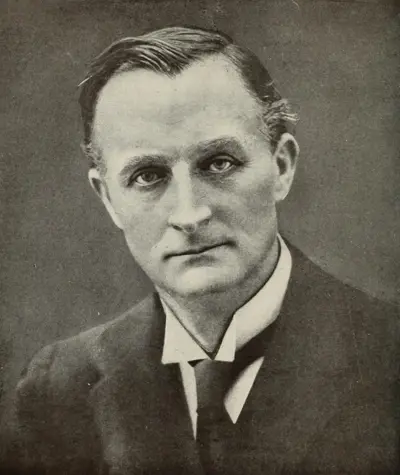
Edward Grey, 1st Viscount Grey of Fallodon, KG, PC, DL, FZS, better known as Sir Edward Grey, was a British Liberal statesman and the main force behind British foreign policy in the era of the First World War.
