Woodrow Wilson Quotes
It was necessary to put the South at a moral disadvantage by transforming the contest from a war waged against states fighting for their indepdence into a war waged against states fighting for the maintenance and extension of slavery...and the world, it might be hoped, would see it as a moral war, not a political; and the sympathy of nations would begin to run for the North, not for the South.
Wilson, Woodrow. A History of the American People. Vol. 4, Harper & Brothers, 1902.


Bragg and other Southerner leaders had an unusual concept of equality. Ever since the original Constitution, Northerner’s votes counted for themselves only while a single Southerner’s vote counted for all his slaves as well. So the individual Southerner always had more political power than his Northern counterpart. However, this notion of equality reached it’s acme when it came to the new territories. The Southern argument was that Southerners could not equally prosper in the new territories of Kansas and Nebraska if they could not bring their slaves to work the land. The thought that Southerners were equally able to personally work the new lands or pay labor seems to never have occurred to them. If Northerners could prosper that way then Southerners should be equally able to do so also. However, many Southern whites simply could not conceive of a “gentleman” working in the fields. Therefore they would not be equally able to prosper in the new territories.

The Prime Minister had a penchant for mis-assessing world affairs in both the old world and the new.

Note the language used for abolitionists in the years leading up to the Civil War. American voters at that time had always lived with the institution of slavery in America and many thought of it as an institutional pillar of the American nation. Those who wanted to bring down an American institution were “fanatics”. Generally this world is used to describe true fanatics and reformers who want to change anything that has been in existence a long while. To paraphrase Edwin Newman, What words shall we use to describe the zealot who wants to destroy the country when every person who wants to improve and change a facet of our system is called a “fanatic.”


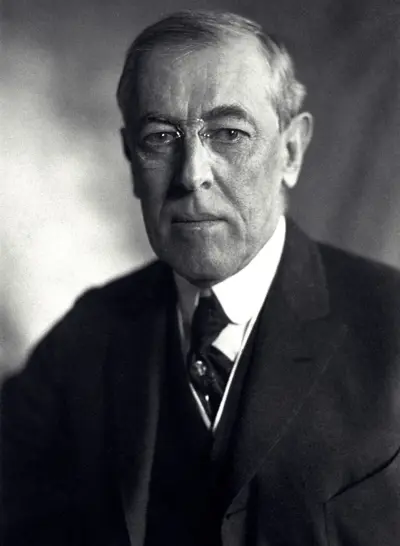
Thomas Woodrow Wilson was an American politician and academic who served as the 28th president of the United States from 1913 to 1921. A member of the Democratic Party, Wilson served as the president of Princeton University and as the 34th governor of New Jersey before winning the 1912 presidential election. As President, Wilson led the United States into World War I in 1917. He was the leading architect of the League of Nations, and his progressive stance on foreign policy came to be known as Wilsonianism. Scholars have generally ranked Wilson in the upper tier of U.S presidents, although he has been criticized for supporting racial segregation and white supremacy.
