Barbara Ehrenreich Quotes
It was a real surprise to me to come across the evidence that Christianity might once have been a danced religion. Certainly, some of the early church leaders thought this was great and spoke of what seems to have been circle dancing, perhaps around an altar.
Ehrenreich, Barbara. Dancing in the Streets: A History of Collective Joy. Metropolitan Books, 2006.


Lopez and Elizer were Jews who had escaped the persecution in Portugal to come to America. They and other non-Christians could live and work in Rhode Island but could not vote or hold public office by a previous decision of the Rhode Island Assembly. See {619707}.The Jews had petitioned for their civil rights.


Much of the Catholic Church was greatly influenced by Aquinas long past his death. This quotation laid the foundation for the view, that anything the Church does, even if seemingly wrong or absurd, has some positive value. Here, Aquinas refused to totally condemn the Church practice of giving indulgences (official absolution for serious sins) to the rich in exchange for money. His view assumes that there must be some good in all acts of the church, even if we can not now determine it. This view makes reform very difficult even after the evil is recognized. Some theologians argue that although this perpetuates some bad practices, it provides stability and prevents leaders of the church from constantly trying to adapt the church to meet current popular or civil criticism.


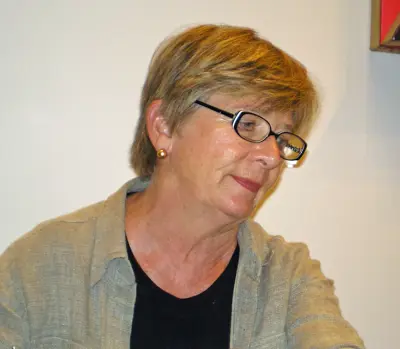
Barbara Ehrenreich is an American author and political activist who describes herself as "a myth buster by trade" and has been called "a veteran muckraker" by The New Yorker. During the 1980s and early 1990s she was a prominent figure in the Democratic Socialists of America. She is a widely read and award-winning columnist and essayist, and author of 21 books. Ehrenreich is perhaps best known for her 2001 book Nickel and Dimed: On (Not) Getting By in America. A memoir of Ehrenreich's three-month experiment surviving on minimum wage as a waitress, hotel maid, house cleaner, nursing-home aide, and Wal-Mart clerk, it was described by Newsweek magazine as "jarring" and "full of riveting grit," and by The New Yorker as an "exposé" putting "human flesh on the bones of such abstractions as 'living wage' and 'affordable housing'." She is a recipient of a Lannan Literary Award.
