Karl Eikenberry Quotes
It strains credibility to expect Karzai to change fundamentally this late in life and in our relationship.
Karzai was totally corrupt and what was worse maintained his political power by allowing local Governors, mayors, warlords, police and judges to extort bribes for virtually all public services and in many cases extorting money from successful businessmen as well as even poor and middle class families. A large proportion of the money that America and its coalition allies were spending for economic development in Afghanistan was being siphoned out of the country by corrupt officials of the government. Karzai then was the beneficiary of the support of all these corrupt officials in rigging his reelection in what became an embarrassing farce for the coalition. There were others in the administration who believed that there might be enough persuasion to produce change in Karzai, and America and the Coalition had no other better option. Eikenberry not only predicted that there would be no change in the corruption levels, but that the average Afghan people would never really support and fight for the government which proved everyday to anyone who would look that the officials of the country were corrupt and had the support and green light from the President.
Karl Eikenberry, Army General, U. S. Ambassador to Afghanistan, Cable to the State Department giving his assessment that there was little chance of success with the American new policy of Counter-Insurgency so long as Hamid Karzai remained as President
Sourced by: Eigen's Political and Historical Quotations

The government of Afghanistan President Hamid Karzai was totally corrupt and preyed on the Afghan people. See {629318}. The United States had committed to the turnover at the end of 2013 the responsibility for maintaining the security of Afghanistan to the Afghan military and police forces who were being trained by the Americans.


The line was delivered by actor Robin Williams.

The Syrians hate the Lebanese and vica versa, After the Lebanese Civil War, Syria took advantage of the weakened nation to send troops to occupy and control Lebanon politically which it did for over a decade.


President Johnson was trying to organize peace talks in Paris. Nixon didn’t want a public announcement to occur before election day when he was running against Hubert Humphrey. Knowing the South Vietnamese President was reluctant to go to Paris but was under pressure from America to do so, he sent a message through Chennault that he should not accept and “hang on” as Nixon would shortly win. The South Vietnam president refused to go to Paris, Nixon won the election, and then had to cope with the continuation of the war that might well have ended before he took office. Nixon believed that he could get Russia and China to pressure Ho Chi Min to make peace. Nixon's private overtures to the South Vietnam president, violated the Logan Act which prohiited private citizens negoatioating with foreign governments. President Johnson was aware of Nixon's commission of this felony want wanted to prosecute him, but the evicence had been obtained from secret intelligene agency bugging and wiretapping both the South Vietnam Embassay in Wishington and the Presidential Palace in Vietnam the public knowledge of which would have caused a scandal. Instead, he called Nixon and warned him to stop, but the damage had already been done, and the South Vitenamese government would not go to Pariis where they would have to agree to a coalition government with the Communists. THey waited for Nixon to deliver a peace treaty which would leave them in charge of South Vietnam. In the final analysis, the South Vietnamese ended up with nothing and no participation in anything when the U. S. Withdrew and the Communists took over.


The problem for McCain was that many of the Bush supporters did not want change, and the opponents did not believe that McCain and the other Republican members of Congress really wanted reform and change from their policies of the recent past. McCain lost to Barack Obama.

He was referring to the President of Egypt in the midst of the Egyptian soft revolution of 2011. Wisner had been asked by the President to tell the corrupt and dictatorial President of Egypt to step down quickly. A few days later, Wisner gave a speech calling for the 30 year Egyptian dictator to finish out his term so he could “steer the changes”. He claimed that he was not speaking for the administration in this speech but it was a personal view. However, the speech created much world confusion as to what the US administration policy actually was. The quotation illustrates one of the problems of conducting diplomacy in a free democracy. A president asks a citizen to represent him; he does, and then turns around and undercuts the very position he was supposed to take. In many counties such an disloyal act would be considered treason but in America there is nothing the administration could do about it, other than to say that the Munich speech was contrary to US policy.


What was remarkable was that all the Defense Department and military witnesses agreed with Lynch on this point.

Russia then had designs on Afghani Territory. About a century later, Russia Invaded Afghanistan and tried to impose a communist government. It failed and the Afghans drove out the Russians.

Mark Twain referring to and reflecting on his encounter with the Sultan of Turkey, Abdul Aziz.


Chavez frequently insulted officials and leaders of other countries. See linked quotes for examples.


Silberman-Robb WMD Commission
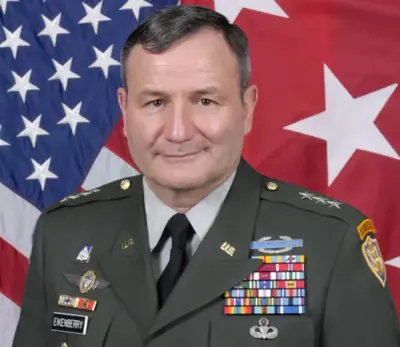
Karl Winfrid Eikenberry is a retired United States Army lieutenant general who served as the U.S. Ambassador to Afghanistan from April 2009 to July 2011. From 2011 to 2019, he was the Director of the U.S. Asia Security Initiative at the Walter H. Shorenstein Asia-Pacific Research Center and a Stanford University professor of the practice; a member of the Core Faculty at the Center for International Security and Cooperation; and an affiliated faculty member at the Freeman Spogli Institute for International Studies, Center on Democracy, Development and the Rule of Law, and The Europe Center.
