Nathaniel Macon Quotes
... it produces so much electioneering among the members of Congress that it seems to border on intrigue & bargain, and it is not known to the Constitution.
Refusing to attend a party caucus:
Nathaniel Macon, 1757-1837, U. S. Congressman & Senator (NC), Speaker of the House, Letter to Martin Van Buren, May 9, 1823
Sourced by: Eigen's Political and Historical Quotations


Congress at that time had about a 12 percent public approval rating. Other emergency disaster appropriations had been made in previous years in days or weeks, but the aid for New Jersey, New York and Connecticut had been voted by the Democratic-controlled Senate but not in the Republican controlled House. The Republican House leadership had planned a vote after the Fiscal Cliff vote the previous evening before the end of the Congressional term. Then the speaker cancelled the vote infuriating Christie and many of the members of Congress. His reason was that there was opposition from the Tea Party Conservative wing of his own party who had just been badly beaten on the fiscal cliff legislation, and the Speaker was up for reelection by his own party caucus the following day. If the vote had proceeded, it would have passed with Democratic and some Republican support but with the opposition of the conservative wing some of whom noted that the states seeking the emergency aid had just recently voted for President Obama and they were opposed to more federal spending despite the fact that emergency aid had never before been subjected to such partisan criteria. After much pressure, the Speaker then committed to an up or down vote in the following Congress to the chagrin of some of the Tea Party members. Governor Christie, much admired for his commitment to his state and not politicking was his candid self but he did not even go as far as Republican Congressman Peter King {630995}.


At the time Jesse Helms, an arch conservative, was a very powerful senator with a great deal of seniority. As such most senators had to work with him to get many things done. Ironically, despite the fact that he and Helms were on polar opposite political sides, they developed a personal working relationship which was quite cordial.


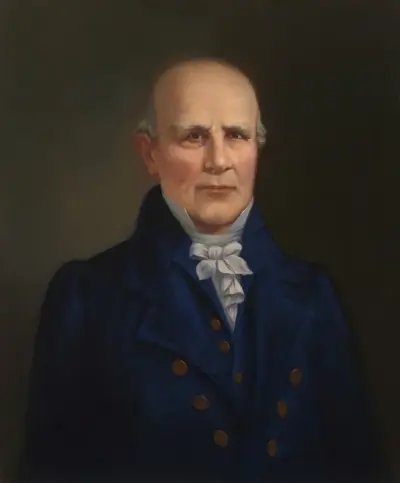
Nathaniel Macon was an American politician who represented North Carolina in both houses of Congress. He was the fifth Speaker of the House, serving from 1801 to 1807. He was a member of the United States House of Representatives from 1791 to 1815 and a member of the United States Senate from 1815 to 1828. He opposed ratification of the United States Constitution and the Federalist economic policies of Alexander Hamilton. Thomas Jefferson dubbed him "Ultimas Romanorum"—“the last of the Romans”.
