Ralph Waldo Emerson Quotes
What a vicious practice is this of our politicians at Washington pairing off ["horse trading"]! As if one man who votes wrong, going away, could excuse you, who mean to vote right, for going away; as if your presence did not tell in more ways than in your vote.
Ralph Waldo Emerson, 1803-1882, Poet & Essayist, Considerations by the Way
Sourced by: Eigen's Political and Historical Quotations


At the time Jesse Helms, an arch conservative, was a very powerful senator with a great deal of seniority. As such most senators had to work with him to get many things done. Ironically, despite the fact that he and Helms were on polar opposite political sides, they developed a personal working relationship which was quite cordial.

Congress at that time had about a 12 percent public approval rating. Other emergency disaster appropriations had been made in previous years in days or weeks, but the aid for New Jersey, New York and Connecticut had been voted by the Democratic-controlled Senate but not in the Republican controlled House. The Republican House leadership had planned a vote after the Fiscal Cliff vote the previous evening before the end of the Congressional term. Then the speaker cancelled the vote infuriating Christie and many of the members of Congress. His reason was that there was opposition from the Tea Party Conservative wing of his own party who had just been badly beaten on the fiscal cliff legislation, and the Speaker was up for reelection by his own party caucus the following day. If the vote had proceeded, it would have passed with Democratic and some Republican support but with the opposition of the conservative wing some of whom noted that the states seeking the emergency aid had just recently voted for President Obama and they were opposed to more federal spending despite the fact that emergency aid had never before been subjected to such partisan criteria. After much pressure, the Speaker then committed to an up or down vote in the following Congress to the chagrin of some of the Tea Party members. Governor Christie, much admired for his commitment to his state and not politicking was his candid self but he did not even go as far as Republican Congressman Peter King {630995}.


No one had a majority of the Electoral College and the election was thrown into the House of Representatives. Henry Clay was the Speaker of the House, and had a grudge against Jackson. He convinced several of the State congressional delegations to vote for John Quincy Adams, and when Adams was President, he made Clay the Secretary of State, then the most powerful cabinet position. Hence Jackson’s characterization.


Samuel Langhorne Clemens, 1835-1910


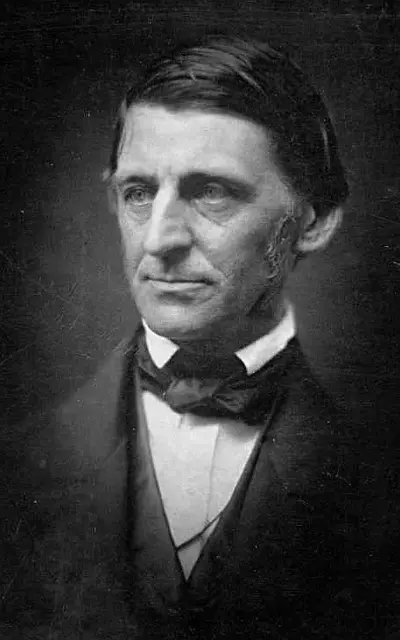
Ralph Waldo Emerson, who went by his middle name Waldo, was an American essayist, lecturer, philosopher, abolitionist and poet who led the transcendentalist movement of the mid-19th century. He was seen as a champion of individualism and a prescient critic of the countervailing pressures of society, and he disseminated his thoughts through dozens of published essays and more than 1,500 public lectures across the United States.
