Walter Lippmann Quotes
The Founding Fathers did not foresee the party system as it has developed, and what they knew about its early beginnings the disliked intensely.
Walter Lippmann, 1889-1974, Political Columnist, Quoted in Gladwin Hill, Dancing Bear, 1968
Sourced by: Eigen's Political and Historical Quotations


Despite his fears, that is exactly what happened. Ironically, he himself was the focus of much dissatisfaction with the administration, and the Federalists led by Adams and the Democratic Republicans led by Jefferson opposed each other, ousting Adams.


It was reasonable and moderate statements like this that caused the right wing of the Republican Party to abandon McCain when he ran for president, He did appeal to many moderates and independents because of the statements he made opposing the extremes such as this one.


The Republican Majority of the House, when Hillary Clinton, the former Secretary of State, was running for President, established a select committee to investigate an incident that occurred in the State Department during Clinton's term. However, there already had been both House and Senate hearings and numerous investigations of the same incident. This committee uniquely was established with no deadlines to finish their work and an unlimited budget. Soon it became clear that the focus of the Republican efforts was on Mrs. Clinton and not on State Department activities except as how they might be negative to Clinton. Even leading Republicans admitted that the majority had abused its Congressional power to investigate to achieve primarily partisan advantage. See {582958} for Hanna's later statement when he incurred the ire of some of the Republicans for his admitting the truth.


Refusing to attend a party caucus:

See Edmund Burke a similar phrase 12 years earlier.
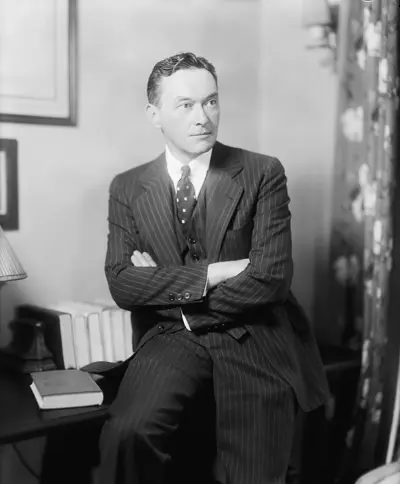
Walter Lippmann was an American writer, reporter and political commentator. With a career spanning 60 years he is famous for being among the first to introduce the concept of Cold War, coining the term "stereotype" in the modern psychological meaning, as well as critiquing media and democracy in his newspaper column and several books, most notably his 1922 book Public Opinion.
