Thomas Cromwell Quotes
It much grieves me that I should be noted a traitor when I always had your laws on my breast, and that I should be a sacramentary. God he knoweth the truth, and that I am of the one and the other guiltless.
He had been condemned to death for treason and heresy by King Henry VII even though he had drafted the legislation that allowed Heny VIII to become Head of the Church of England
Thomas Cromwell, ~1485-1540, Earl of Essex, English Chancellor of the Exchequer, Letter to Henry VIII, 30 June 1540
Sourced by: Eigen's Political and Historical Quotations

“Lord Haw Haw” was the name that he used in his propaganda broadcasts from Germany to England. Despite the fact that the broadcasts were anti-British and pro German, many in Britain listened to him regularly. He was very witty and many of his criticisms of British society were views held by many patriots in Britain. As pure entertainment, he was better than most of the BBC broadcasts during WWII. At the end of the war, Joyce was captured, tried and executed for treason.


Kahn was killed by an American Drone Strike in Yemen in 2011. Inspire Magazine was an Online Magazine Al Qaeda produced.

Commenting on a former CIA agent's defection to Russia:


In 1937 four nationalist army columns were converging on Madrid in the Spanish Civil War. General Mola was asked which column would take Madrid. His reference to the sympathizers inside the city became a universal term for traitors.


He was an ally of the Ku Klux Klan and shared their vision of a binary moral and ethical world. There was no room for critics of the war effort.
He was a Protestant liberal and opposed to the English rule of Ireland and the discrimination against the Catholics. To make an example to inhibit Irish protestants from joining the Society of United Irishmen, he was accused of giving an oath to a British Soldier that he would support Irish independence. This had been made a capital crime shortly before. Actually, it was another member of the Society who administered the oath, but the prosecutor arranged for perjured testimony to convict the more prominent Orr. His execution was remembered by liberal Catholics and Protestants alike and in the rebellion the following year the rebel battle cry was “Remember Orr”.
Every Southerner who foiught in the Civil War committed treason. And technically, all the Patriots who fought in the American Revoltion were also Traitors. So since many of us are distant relatives of one or both of these groups, we have Traitors in the family.


In the 1912 Republican nominating convention, Theodore Roosevelt was contesting the renomination of President William Howard Taft whom he had originally picked as the Republican nominee four years earlier. Then Senator Harding gave the nominating speech for Taft. In it he described Roosevelt as:

Arnold was not just any senior officer, but one who had been a great fighter against the British not only, leading his men brilliantly but exposed himself to great danger in the process. He had been such a hero that Washington could not imagine how an officer like that could become a traitor to the cause. Arnold’s treasom had nothing to do with ideology or the issues of the war. Arnold felt that he had not been appreciated for his efforts (his commanding officer gave him no credit for the most heroic and effective military battlefield leadership up to that point in the war) and became disaffected.

He held up tools made by the Stanley Tool Company which had announced that they were relocating to Bermuda to avoid paying American taxes. The company changed its mind after this sort of publicity.

Bush had served earlier as the head of the CIA and understood the costs of such better than most. He was put in a difficult position when his son was President and one of the senior White House operatives, for small partisan advantage, leaked the name and identity of Valerie Plame, a covert CIA operative. Bush the father, remained silent even after the leaker was identified.

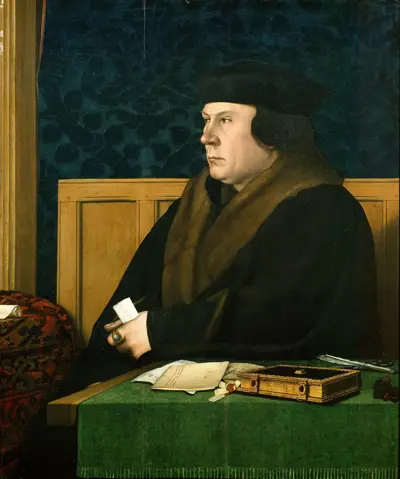
Thomas Cromwell, 1st Earl of Essex, KG, PC was an English lawyer and statesman who served as chief minister to King Henry VIII from 1534 to 1540, when he was beheaded on orders of the king.
