Warren G. Harding Quotes
... a Benedict Arnold.
In the 1912 Republican nominating convention, Theodore Roosevelt was contesting the renomination of President William Howard Taft whom he had originally picked as the Republican nominee four years earlier. Then Senator Harding gave the nominating speech for Taft. In it he described Roosevelt as:
Warren G. Harding, 1865-1923, 29th President of the United States (Republican, OH), Nominating speech, Republican National Convention, Chicago, June 18, 1912
Sourced by: Eigen's Political and Historical Quotations


“Lord Haw Haw” was the name that he used in his propaganda broadcasts from Germany to England. Despite the fact that the broadcasts were anti-British and pro German, many in Britain listened to him regularly. He was very witty and many of his criticisms of British society were views held by many patriots in Britain. As pure entertainment, he was better than most of the BBC broadcasts during WWII. At the end of the war, Joyce was captured, tried and executed for treason.


Arnold was not just any senior officer, but one who had been a great fighter against the British not only, leading his men brilliantly but exposed himself to great danger in the process. He had been such a hero that Washington could not imagine how an officer like that could become a traitor to the cause. Arnold’s treasom had nothing to do with ideology or the issues of the war. Arnold felt that he had not been appreciated for his efforts (his commanding officer gave him no credit for the most heroic and effective military battlefield leadership up to that point in the war) and became disaffected.

The event that triggered the call was President Lyndon Johnson introducing the Voting Right Act. Russell had been a mentor to the young Johnson, a fellow Southerner who had voted against and blocked all civil rights legislation when he was in the House and Senate. However when he became President, his representation changed and he reverted to his pre-political views. {637651}


President Clinton had engaged in sex with an intern in the Oval Office and lied about it in investigations. Clinton had been an embarrassment anathema to the Republicans by producing a remarkably strong economy without cutting taxes, reducing government deficits, cutting the size of government, winning the Serbian war without a single American soldier dying, and preempting many of their programs. So the Republicans who controlled both Houses of Congress decided to impeach Clinton for the lies. Wexler argued that there was no damage done to the nation and the sex and lying did not rise to the required level of an impeachable offense. On a party line vote, Clinton was impeached, but the Republicans could not even get the majority of the Senate which they controlled. Most senators agreed with Wexler. See {583801} for a later summary of the absurdity of impeaching Clinton who left office as one of the most popular presidents in modern times.


Clay came from the western part of Kentucky—then the "western" part of the United States.


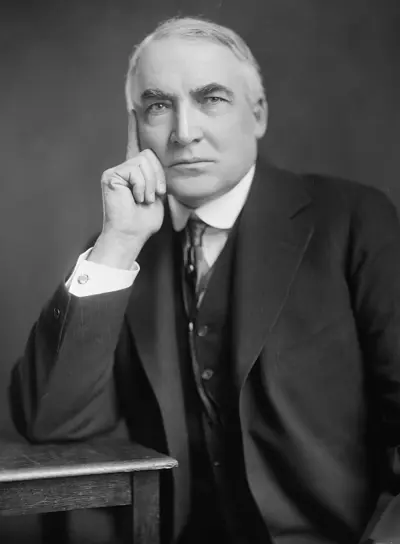
Warren Gamaliel Harding was the 29th president of the United States, serving from 1921 until his death in 1923. A member of the Republican Party, he was one of the most popular U.S. presidents to that point. After his death, a number of scandals, including Teapot Dome, came to light, as did his extramarital affair with Nan Britton; those eroded his popular regard.
