Alexander Hamilton Quotes
It (lifetime appointment of judges) is the best expedient which can be devised in any government, to secure a steady, upright, and impartial administration of the laws.
The notion of lifetime appointment for federal judges had been debated before and during the constitutional convention. The founders wrote it into the constitution to give the judges more security so that they could not be pressured by politicians or wealthy individuals. Also, without this concept many countries have judges who are just rubber stamps for the legislature or the leader of the country.
Alexander Hamilton, 1755-1804, Aide-de-camp to General Washington, Member of the Continental Congress and the Constitutional Convention, U. S. Secretary of the Treasury (Federalist, NY), Federalist 78, 1788
Sourced by: Eigen's Political and Historical Quotations

White was not confirmed.

The government of Pakistan regarded this as seditious. The Government can fire judges at will and the military has the right to convene its own courts and try Pakistani civilians for certain alleged crimes by removing their cases from the civilian courts. Even when a Pakistani judge is not intimidated by the government or the military, the Islamic extremist fanatics often assassinate any public official who any one of thousands of fanatics feels is anti-Islamic.


He served on a Supreme Court that was as close to political as any had ever been. Hence his great concern.


Others argue that the prosecutors are the weakest link in the system. See {631696}.


The judiciary in the American system must give deference to the executive and legislative branches and interfere only when there is a violation of the Constitution. Many of the laws may well be viewed as bad policy by the judge, or in some case, may be unjust. The judge however cannot interfere just because he is dealing with bad or unjust laws. So Judge Scalia points out that the judge functioning properly in the American system will find that he personally does not like the consequences of his own opinions.

This shameful quotation was shocking to most readers. It is subject to two interpretations: One that judges who did not rule on Constitutional issues the way conservative extremists wanted would come to physical harm. The other, that conservatives should pressure judges by withholding appropriations for the courts, impeachments and recall elections where they exist, as well as funding potential opponents for those jurisdictions where judges are elected. Both meanings were disgraceful in the view of most Americans. Later, DeLay was convicted and sentenced to jail for money laundering and illegally spending and raising campaign funds. He was also reprimanded by the House Ethics Committee for unethical methods of fund raising for other earlier actions.

Over 30 states at the time required state judges to stand for election. The result was that they had to have money to finance their campaigns like any other politicians. The results were many cases of lack of impartiality and enormous public perception that the judges were beholden to large campaign contributors. Justice O’Connor pointed out to them that they had created their own problems by popularly electing judges.

Judges are restrained by the law and precedence (stare decisis), as well as having to uphold what he/she thinks are undesirable laws or find against laws he thinks are good. He must decide on the law and the facts of the particular case. And if he is an appellate or a Supreme Court judge he must make compromises to accommodate other justices hearing the case along with him/her.
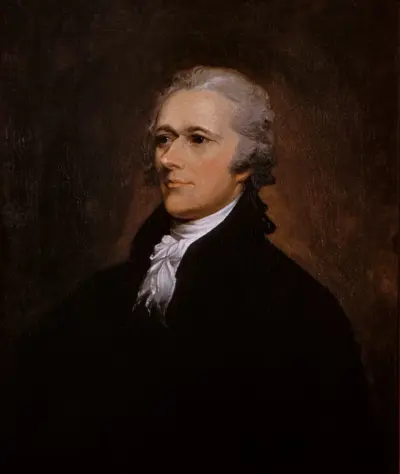
Alexander Hamilton was an American statesman, politician, legal scholar, military commander, lawyer, banker, and economist. He was one of the Founding Fathers of the United States. He was an influential interpreter and promoter of the U.S. Constitution, as well as the founder of the nation's financial system, the Federalist Party, the United States Coast Guard, and the New York Post newspaper. As the first secretary of the treasury, Hamilton was the main author of the economic policies of George Washington's administration. He took the lead in the federal government's funding of the states' debts, as well as establishing the nation's first two de facto central banks, the Bank of North America and the First Bank of the United States, a system of tariffs, and friendly trade relations with Britain. His vision included a strong central government led by a vigorous executive branch, a strong commercial economy, government-controlled banks, support for manufacturing, and a strong military.
