Robert Bork Quotes
Federal judges, alone among public officials, are given life tenure precisely so that they will not be accountable to the people.
Robert Bork, U. S. Solicitor General, Judge, U. S. Court of Appeals, Washington DC, "The Senate's Power Grab," New York Times, June 23, 1993
Sourced by: Eigen's Political and Historical Quotations

The notion of lifetime appointment for federal judges had been debated before and during the constitutional convention. The founders wrote it into the constitution to give the judges more security so that they could not be pressured by politicians or wealthy individuals. Also, without this concept many countries have judges who are just rubber stamps for the legislature or the leader of the country.


White was not confirmed.


The government of Pakistan regarded this as seditious. The Government can fire judges at will and the military has the right to convene its own courts and try Pakistani civilians for certain alleged crimes by removing their cases from the civilian courts. Even when a Pakistani judge is not intimidated by the government or the military, the Islamic extremist fanatics often assassinate any public official who any one of thousands of fanatics feels is anti-Islamic.


Others argue that the prosecutors are the weakest link in the system. See {631696}.


Some of the Founding Fathers did not conceive of the kind of judiciary where Federal courts could nullify an act of the Congress by declaring a law unconstitutional. Morris was one. Others did. The Constitution is not very explicit on this point, but the nation has settled with a process that would have surprised Morris and a few others.


He served on a Supreme Court that was as close to political as any had ever been. Hence his great concern.
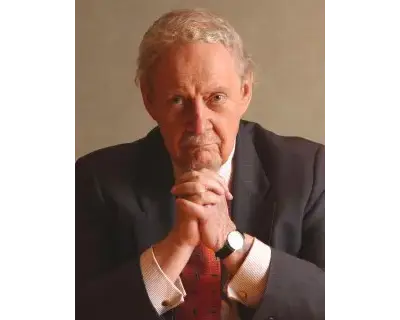
Robert Heron Bork was an American judge, government official, and legal scholar who served as the Solicitor General of the United States from 1973 to 1977. A professor at Yale Law School by occupation, he later served as a judge on the influential U.S. Court of Appeals for the D.C. Circuit from 1982 to 1988. In 1987, President Ronald Reagan nominated Bork to the U.S. Supreme Court, but the U.S. Senate rejected his nomination.
