Aeschylus Quotes
. . . it is yours women's to be silent and stay within doors.
Aeschylus. Seven Against Thebes. Translated by Herbert Weir Smyth. Aeschylus: Suppliant Maidens, Persians, Prometheus, Seven Against Thebes, Harvard University Press, 1922, p. 337.


Within Christianity there has been a continual debate regarding a woman’s proper role in society in general and in church affairs in particular. This quotation is often used to justify a husband’s dominant role over the wife. Also it supports those who object to women in the ministry or the priesthood. See {587062}. It is useful to note that much of Islam which preaches a similar view of females, probably learned it from Christianity which preceded Islam by almost 600 years.


This is one of the biblical passages which cause some Christian Fundamentalists to prescribe a secondary and subjugated role for women. Also the view that women, like children, should be seen and not heard. Also it supports those who object to women in the ministry or the priesthood or in senior teaching positions. See {587063}. It is useful to note that much of Islam which preaches a similar view of females, probably learned it from Christianity which preceded Islam by almost 600 years.

This Biblical passage has been frequently used to justify discrimination against women.

Ferrer was the last public figure to be executed in Europe for heresies like this.

This was her last public speech. In general, when women would speak in public, they would be ridiculed and castigated by the press which reflected a macho cultural view that women should be seen and not heard,

He served a jail sentence in Britain for inciting race hatred.

Abbot was apparently ignorant of the American women who did fight in the American Revolution, the War of 1812 or the Civil War where there were a few women who fought on both sides some of whom were decorated. Nor did he seem to acknowledge Joan of Arc and other female warriors in world history. But he would be truly shocked by the tens of thousands of “civilized” women who volunteered and served in the American military once they were allowed to do so and the “civilized” men who fought with them as compatriots.


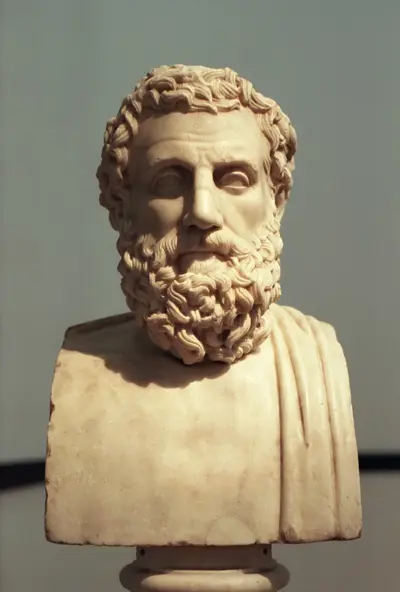
Aeschylus (UK: /ˈiːskɪləs/, US: /ˈɛskɪləs/; Greek: Αἰσχύλος Aiskhylos, pronounced [ai̯s.kʰý.los]; c. 525/524 – c. 456/455 BC) was an ancient Greek author of Greek tragedy, and is often described as the father of tragedy. Academics' knowledge of the genre begins with his work, and understanding of earlier Greek tragedy is largely based on inferences made from reading his surviving plays. According to Aristotle, he expanded the number of characters in the theatre and allowed conflict among them. Before this, characters interacted only with the chorus.
