Philip Henry Sheridan Quotes
It is useless to attempt to disguise the hostility that exists on the part of a great many here toward northern men…. There is now a test of what shall be the status of northern men–whether they can live here without being in constant dread or not; whether they can be protected in life and property, and have justice in the courts.
Resentment over the Southern loss of the Civil War did not dissipate. Hatred and anger were taken out on any Northerner who appeared. The local politicians not only didn’t keep the peace but they were the instigators of much of the violence and made sure that no Southerner would be convicted for violence against a Northerner. The President however, a Southerner himself, vacillated as to how to deal with the situation and lawlessness over reconstruction and race issues was encouraged throughout the South leading to almost 100 years of lynchings, Ku Klux Klan and other violence and intimidation.
Philip Henry Sheridan, 1831-1888, Army General & Reconstruction Official, Telegram from New Orleans to President Andrew Johnson, August 6, 1866
Sourced by: Eigen's Political and Historical Quotations


She was one of the first prominent white southerners to denounce racial segregation.


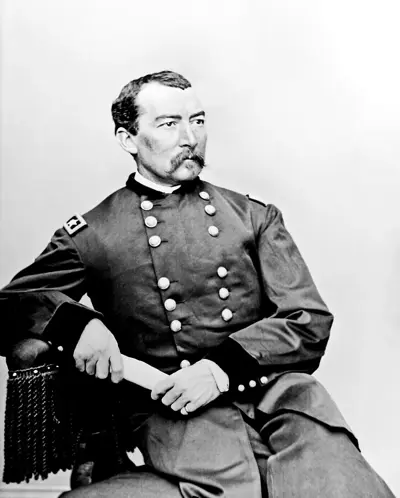
Philip Henry Sheridan was a career United States Army officer and a Union general in the American Civil War. His career was noted for his rapid rise to major general and his close association with General-in-chief Ulysses S. Grant, who transferred Sheridan from command of an infantry division in the Western Theater to lead the Cavalry Corps of the Army of the Potomac in the East. In 1864, he defeated Confederate forces under General Jubal Early in the Shenandoah Valley and his destruction of the economic infrastructure of the Valley, called "The Burning" by residents, was one of the first uses of scorched-earth tactics in the war. In 1865, his cavalry pursued Gen. Robert E. Lee and was instrumental in forcing his surrender at Appomattox.
