Mary McLeod Bethune Quotes
If we accept and acquiesce in the face of discrimination, we accept the responsibility ourselves. We should, therefore, protest openly everything ... that smacks of discrimination or slander.
Mary McLeod Bethune, 1875-1955, Educator, Attributed
Sourced by: Eigen's Political and Historical Quotations


Resentment over the Southern loss of the Civil War did not dissipate. Hatred and anger were taken out on any Northerner who appeared. The local politicians not only didn’t keep the peace but they were the instigators of much of the violence and made sure that no Southerner would be convicted for violence against a Northerner. The President however, a Southerner himself, vacillated as to how to deal with the situation and lawlessness over reconstruction and race issues was encouraged throughout the South leading to almost 100 years of lynchings, Ku Klux Klan and other violence and intimidation.


For a similar sentiment, see Thurgood Marshall.
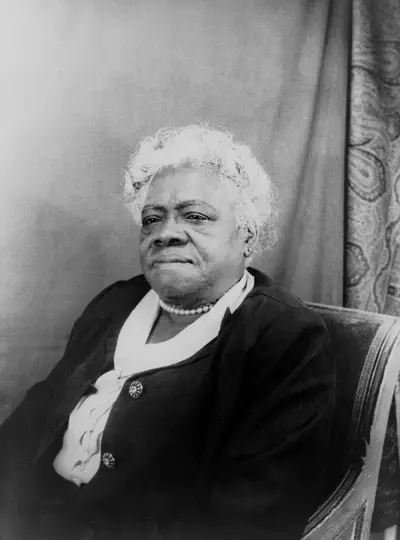
Mary Jane McLeod Bethune was an American educator, stateswoman, philanthropist, humanitarian, womanist, and civil rights activist. Bethune founded the National Council for Negro Women in 1935, established the organization's flagship journal Aframerican Women's Journal, and resided as president or leader for myriad African American women's organizations including the National Association for Colored Women and the National Youth Administration's Negro Division. She also was appointed as a national adviser to president Franklin D. Roosevelt, whom she worked with to create the Federal Council on colored Affairs, also known as the Black Cabinet. She is well known for starting a private school for African-American students in Daytona Beach, Florida; it later continued to develop as Bethune-Cookman University. Bethune was the sole African American woman officially a part of the US delegation that created the United Nations charter, and she held a leadership position for the Women's Army Auxiliary Corps. For her lifetime of activism, she was deemed "acknowledged First Lady of Negro America" by Ebony magazine in July 1949 and was known by the Black Press as the "Female Booker T. Washington". She was known as "The First Lady of The Struggle" because of her commitment to gain better lives for African Americans.
