Paul Kagame Quotes
It is the population which decides when it's time for a leader to leave, not foreign powers.
Kagame, Paul. "Address to the National Assembly on the Constitutional Amendment." Republic of Rwanda, 2015.


The speech was never actually delivered, but instead the Bishop published it. It received wide distribution including in America where it was published by the Maryland Gazette on September 29, 1774.


Majority public opinion does not always prevail in a modern democracy as there are Constitutional limits on the prerogatives of the majority. Also leadership has played a strong role in America’s development where strong leaders have been able to do the right thing despite contrary public opinion.

During the early days of the American independence movement, many were preoccupied with the philosophical and theological issues of whether the Almighty approved of monarchy or not. Parker urged concentration on assuring independence first.

The Muslim Brotherhood which had been elected after the Arab Sprint deposition of President Mubarak, had then begun to institute their own religious philosophy into what was becoming a theocratic government. Rights of Christians, and other non-Muslims as well as moderate Muslims, together with women, democrats and advocates for human rights and freedom were trampled. 30 million people demonstrated in the streets and the nation was about to have a civil war when the military, under el-Sisi, deposed the Muslim Brotherhood government. When the Brotherhood took to the streets, many with weapons, there was a clash where almost 1000 Brothers were killed as were almost 100 police. The general was addressing the Egyptians and the rest of the world explaining the reason for breaking up the demonstrations.


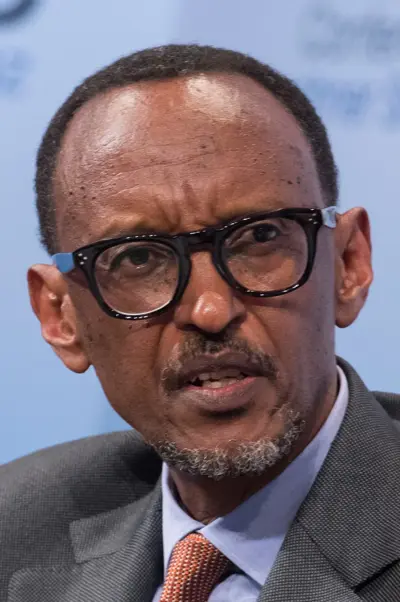
Paul Kagame is a Rwandan politician and former military leader. He is the 6th and current president of Rwanda, having taken office in 2000. Kagame previously commanded the Rwandan Patriotic Front (RPF), a Uganda-based rebel force which invaded Rwanda in 1990 and was one of the parties of the conflict during the Rwandan Civil War and the Rwandan genocide. He was considered Rwanda's de facto leader when he served as Vice President and Minister of Defence under President Pasteur Bizimungu from 1994 to 2000.
