Sallust Quotes
It is not unlikely, too, that the rejection of God is a kind of punishment: we may well believe that those who knew the Gods and neglected them in one life may in another life be deprived of the knowledge of them altogether. Also those who have worshipped their own kings as gods have deserved as their punishment to lose all knowledge of God.
Sallustius. "On the Gods and the World." Five Stages of Greek Religion, translated by Gilbert Murray, Clarendon Press, 1925, p. 261.

During the American Revolution many patriot clerics argued against the monarchy by claiming that God has given Kings to the Ancient Jews—who had a type of Republic—as a punishment. Therefore monarchy is to be avoided.

Yazid ibn al-Walid ibn 'Abd al-Malik. This is an Islamic doctrine that operates to this day together with the stricture that a bad ruler must be endured and not revolted against UNLESS he does not follow his Islamic religious obligations. This is why many Islamic rulers curry favor with the clerics. As long as they do not claim he is violating the word of God, his rule is safe from revolution. However, if the clerics turn on him, he is in deep trouble. Thus Saudi Arabia endures a monarchy and the ruling family pays the Wahhabi enormous sums to avoid their religious condemnation.


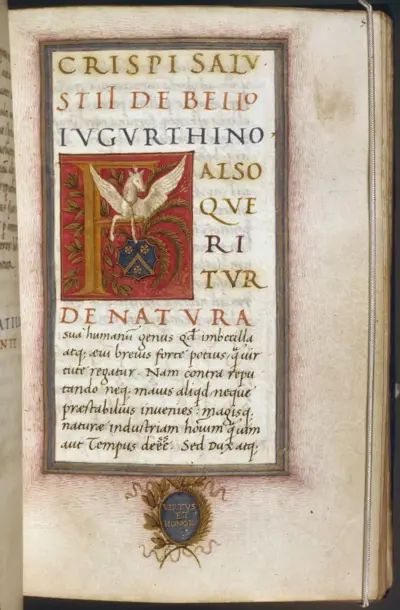
Gaius Sallustius Crispus, usually anglicised as Sallust (/ˈsæləst/; 86 – c. 35 BC), was a Roman historian and politician from an Italian plebeian family. Sallust was born at Amiternum in the country of the Sabines and was a popularis, an opponent of the old Roman aristocracy, throughout his career, and later a partisan of Julius Caesar. Sallust is the earliest known Latin-language Roman historian with surviving works to his name, of which Catiline's War (about the conspiracy in 63 BC of L. Sergius Catilina), The Jugurthine War (about Rome's war against the Numidian King Jugurtha from 111 to 105 BC), and the Histories (of which only fragments survive) are still extant. Sallust was primarily influenced by the Greek historian Thucydides and amassed great (and ill-gotten) wealth from his governorship of Africa.
