Mahatma Gandhi Quotes
Punishment is God's. He alone is the infallible Judge.
Gandhi, Mahatma. The Collected Works of Mahatma Gandhi. Vol. 42, Publications Division, Ministry of Information and Broadcasting, Government of India, 1970, p. 259.


During the American Revolution many patriot clerics argued against the monarchy by claiming that God has given Kings to the Ancient Jews—who had a type of Republic—as a punishment. Therefore monarchy is to be avoided.


Gordon himself was killed shortly thereafter by the Madhi’s followers at the siege of Khartoum. Ahmed died soon thereafter. Although Ahmed was an extreme religious fanatic, and a skillful leader, he was not a terrorist.

A massive earthquake struck Japan, destroying most of Tokyo and Yokohama. The deaths were so extensive that no official count was ever made. At the time, Japanese politics was polarized by two factions: One urged Japan to become democratic and modern like the West; the other, urged Japanese right wing militarism and expansionism. The shock of the Japanese population of such an enormous natural disaster, were seem by most Japanese as a punishment from God as Yasubumi and many other Japanese leaders stated. The reason for the punishment claimed by most was the recent adoption of Western ideas, lifestyles and particularly the trend away from traditional Japanese authoritarian government and toward Democracy. Japan then rejected democratic ideas and followed a militaristic, expansionistic, aggression leading directly to WWII.

Yazid ibn al-Walid ibn 'Abd al-Malik. This is an Islamic doctrine that operates to this day together with the stricture that a bad ruler must be endured and not revolted against UNLESS he does not follow his Islamic religious obligations. This is why many Islamic rulers curry favor with the clerics. As long as they do not claim he is violating the word of God, his rule is safe from revolution. However, if the clerics turn on him, he is in deep trouble. Thus Saudi Arabia endures a monarchy and the ruling family pays the Wahhabi enormous sums to avoid their religious condemnation.

He was reacting to the fact that the Supreme Court had ruled that a State could not criminalize adult, consensual, homosexual behavior.


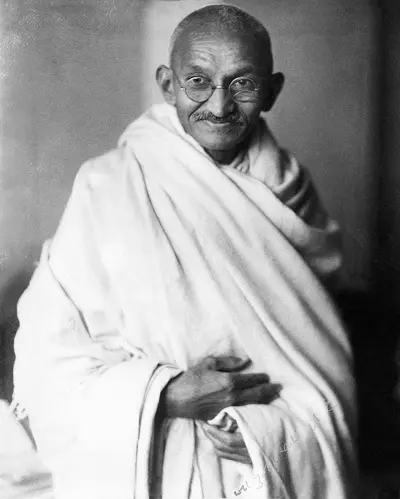
Mohandas Karamchand Gandhi was an Indian lawyer, anti-colonial nationalist, and political ethicist, who employed nonviolent resistance to lead the successful campaign for India's independence from British rule, and in turn inspired movements for civil rights and freedom across the world. The honorific Mahātmā (Sanskrit: "great-souled", "venerable"), first applied to him in 1914 in South Africa, is now used throughout the world.
