John Stuart Mill Quotes
It is not much to be wondered at if impatient or disappointed reformers, groaning under the impediments opposed to the most salutary public improvements by the ignorance, the indifference, the intractableness, the perverse obstinacy of a people, and the corrupt combinations of selfish private interests armed with the powerful weapons afforded by free institutions, should at times sigh for a strong hand to bear down all these obstacles, and compel a recalcitrant people to be better governed.
John Stuart Mill, 1806-1873, Member of Parliament, British Political Economist, Representative Government, 1861
Sourced by: Eigen's Political and Historical Quotations


This is also true in modern politics where almost all petitions and demonstrations are also the apprehension of loss of rights. This is true even when parties contest as in 2011 where the Tea Party and the Occupy Movement both were outraged that they were losing their rights, and in a different ways, both were.


He was comparing journalism to playwriting.


Even in modern times, almost all reform efforts succeed only if there is some villain or group of villains whose removal is the target of the reform effort. Then legislative changes are made to prevent future villains from being able to do the sane thing.


She had done a monumental exposé of the Standard Oil Company illegal and immoral activities. The public was so aroused that many reforms were instituted and the Standard Oil Company Trust was broken up into many smaller companies. Tarbell was then, in the words of S. S. McClure, “the most famous woman in America.”

The public had been roused by the meatpacking scandal and the other exposes of the leading muckraking journalists—of which Baker was one. President Roosevelt had galvanized and led the public opinion to pressure congress and major great reforms were under way that would change America forever—see New York Times editorial {86516}.

This was the origin of the term "military-industrial complex." This speech was written by Malcolm Moos who first penned the term. However, conceptually it was referred to earlier by C. Wright Mills in 1954— {623497}.

See {594396} for his going a step further and advocating lying in the interest of the nation. Note that he does not consider the simple alternative of telling the voters and then fixing the problem.


The impication is that small changes are just as hard often and might be easier than large changes.
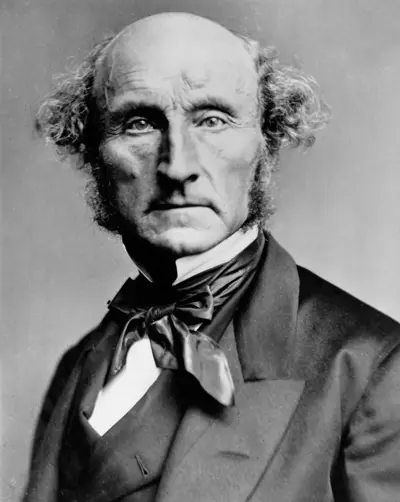
John Stuart Mill, usually cited as J. S. Mill, was an English philosopher, political economist, Member of Parliament, and civil servant. One of the most influential thinkers in the history of classical liberalism, he contributed widely to social theory, political theory, and political economy. Dubbed "the most influential English-speaking philosopher of the nineteenth century", he conceived of liberty as justifying the freedom of the individual in opposition to unlimited state and social control.
