Calvin Coolidge Quotes
It is necessary to have party organization if we are to have effective and efficient government.
Calvin Coolidge, 1872-1933, 30th President of the United States (Republican, MA), Quoted in Eward E. Whiting, Calvin Coolidge
Sourced by: Eigen's Political and Historical Quotations


Referring to the 1988 presidential election:


Abraham Lincoln was the only third party candidate to win the presidency in U.S. history. However, when he was nominated, there was little conviction among Republicans that a third or fourth party could actually win:. Lincoln's primary opponent, William H. Seward

1st Earl of Beaconsfield


Republican Party primary elections had become very contentious. The radical right and the Tea Party, though a minority of the party, had the power to destroy almost any Republican candidate’s chances. So those Republican political candidates were forced to pander to the extreme right and then try and backtrack to the center for the general election. As a result, few people believed the statements of Republican office seekers as no one knew what they really believed including members of their own party, Bush, no longer running for any political position, found himself with much more credibility and influence in the party than those who were running for office. The problem of appealing to party extremes was not unique to the Republicans at that time, but the degree and extent was unprecedented accounting for the distrust.
1st Earl of Beaconsfield

While this is generally true, there have been times where one candidate has been so unattractive, corrupt, or unsavory -- or was closely alighted with such an unpopular figure --that the opponent won without a message just concentrating on the negative aspects of the opponent.


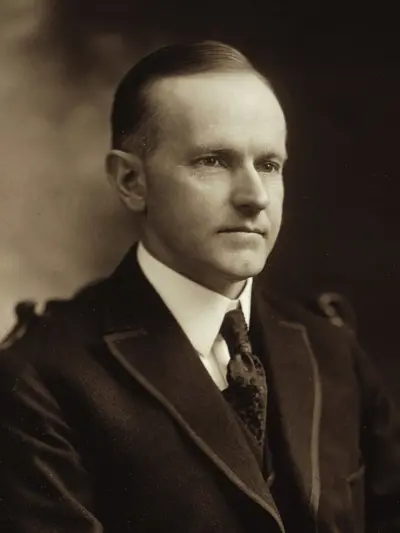
Calvin Coolidge was an American lawyer and politician who served as the 30th president of the United States from 1923 to 1929. A Republican lawyer from New England, born in Vermont, Coolidge worked his way up the ladder of Massachusetts state politics, eventually becoming governor of Massachusetts. His response to the Boston Police Strike of 1919 thrust him into the national spotlight and gave him a reputation as a man of decisive action. The next year, he was elected the 29th vice president of the United States, and he succeeded to the presidency upon the sudden death of Warren G. Harding in 1923. Elected in his own right in 1924, he gained a reputation as a small-government conservative and also as a man who said very little and had a rather dry sense of humor.
