John C. Calhoun Quotes
It is federal, because it is the government of States united in a political union, in contradistinction to a government of individuals, that is, by what is usually called, a social compact. To express it more concisely, it is federal and not national because it is the government of a community of States, and not the government of a single State or Nation.
Calhoun, John C. A Discourse on the Constitution and Government of the United States. Edited by Richard K. Crallé, A.S. Johnston, 1851, p. 113.


Mason’s view prevailed. What is interesting is that Mason saw the State as the State Legislature as opposed to the people of the state directly voting for the Senators as we do today.


There was huge pressure on the central government to decentralize as they held all the power in Indonesian society. However, if they devolved power to the Provinces (States), many of them could be large enough and independent enough to secede and become an independent country as East Timor had done. So the Indonesian power structure bypassed the Provincial governments and devolved power directly to the local governments, none of which was independent enough to go it alone. The desired objective was met—no more secessions. However, there was no one to worry about regional and national issues and problems as the politicians who had power were all local. The country was becoming non-functional in many ways.


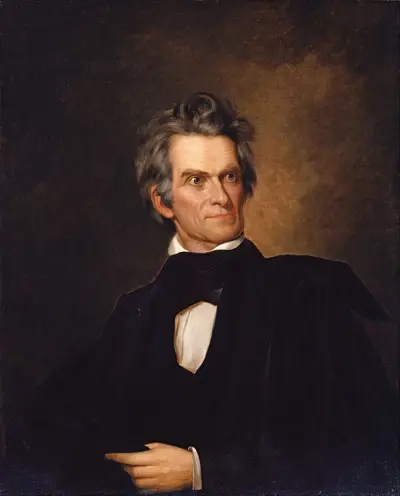
John Caldwell Calhoun was an American politician and political theorist from South Carolina who held many important positions including being the seventh vice president of the United States from 1825 to 1832, while adamantly defending slavery and protecting the interests of the white South when its residents were outnumbered by Northerners. He began his political career as a nationalist, modernizer, and proponent of a strong national government and protective tariffs. In the late 1820s, his views changed radically, and he became a leading proponent of states' rights, limited government, nullification, and opposition to high tariffs. He saw Northern acceptance of those policies as a condition of the South remaining in the Union. His beliefs and warnings heavily influenced the South's secession from the Union in 1860–1861.
