William H. Crawford Quotes
It is difficult even now for the President to avoid giving his approbation to any law appropriating money for a road or canal.
William H. Crawford, 1772-1834, U. S. Congressman & Senator (GA), U. S. Secretary of War, U. S. Secretary of the Treasury, Minister to France, Letter to James Tallmadge Jr., July 12, 1819
Sourced by: Eigen's Political and Historical Quotations


Louis had maintained that the earmark was a cowardly and corrupt way of a congressman bringing pork back to their districts and paying back campaign contributors. He argued that if what the Congressmen were doing were right, why not introduce a bill publicly, debate it, defend it, and try to get a majority for it rather than sneak it in some large piece of legislation without anyone knowing who even introduced the legislation or got the pork into the bill.


Many members of his own party opposed some of the President's policies and programs, and party loyalty and discipline were strained:


During a weekly news conference held July 28, 2021, Pelosi was asked to explain why the Biden Administration and Democrats in Congress were pushing for student loan debt forgiveness and cancellation.


In subsequent years military officers got around this restriction by privately expressing confidential opinions to members of Congress and the press. In the Iraq war for example most senior military officers felt that more troops were needed in Iraq. However, since the President decided on the final troop count only one official, the Army Chief of Staff, has publicly expressed the view that it was insufficient. He was retired early. The stricture still stands.


He was one of the few Congressman who never engaged in the shady practice of earmarking appropriations for their own districts, states, constituents and lobbyists who contribute to their campaigns. However, like almost all members of Congress, he was very aggressive in seeking and supporting programs for his district.


President Jefferson in 1803, in the first instance of presidential impoundment, deferred for a few months the building of gunboats for which Congress had appropriated funds. In 1876 the President actually refused to spend the congressionally appropriated funds for river and harbor improvements in the midst of bad economic times:
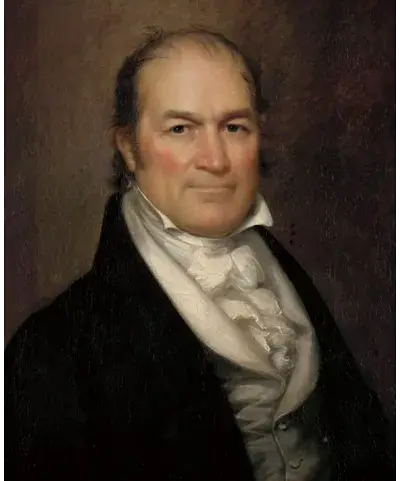
William Harris Crawford was an American politician and judge during the early 19th century. He served as US Secretary of War and US Secretary of the Treasury before he ran for US president in the 1824 election.
