Maimonides Quotes
It is better and more satisfactory to acquit a thousand guilty persons than to put a single innocent one to death.
Maimonides, Moses. The Commandments: Sefer Ha-Mitzvoth of Maimonides. Translated by Charles B. Chavel, Soncino Press, 1967, Negative Commandment 290.


He was one of the few “national security hawks” who was willing to place this issue in the public table. In the 21st Century, there were some Muslims living in Democratic countries who were or had just become radical Islamic extremist jihadist by religious belief and philosophy. Some would preach or advocate violence in terrorism against Democracy and the west. Many of these people with radical Islamic beliefs would give material aid and comfort to terrorists and some would themselves engage in terrorist activities themselves. When they did, it was too late to prevent tragedies. So there was this population of emotional and intellectual terrorists who could act on their beliefs at any moment. These are what Hayden referred to as the “not yet guilty”. Preventive detention could protect against serious terrorist attacks. But the legal system of virtually every democracy had no legal bases to incarcerate or move against anyone for his/her beliefs or speech. Criminal charges required action other than thoughts, beliefs or speech. But by waiting until there is terrorist action, the law enforcement authorities give up the ability to prevent the terrorist action. Some were advocating changes in this fundamental and traditional distinction of law enforcement.


This is the first appearance of the principle which guides law enforcement in most of America and the other industrialized democracies around the world. Texas and some other localities have rejected this notion and see the occasional execution of an innocent person the cost we must pay in order to preserve law and order.

Texas executes more people than the rest of the United States does. However, just before the debate an investigation disclosed 56 recent cases in Texas where the “criminals” were completely exonerated based on the work of some volunteer attorneys and law students. They were all released from jail where many had served decades for crimes they did not commit. 5 were released from Death Row—awaiting to be executed. See {635339}.

This quotation is a great example of the difficulty of deciding some of the major Constitutional issues. Most reasonable people believe that Rehnquist certainly has a point. On the other hand, critics observe that this quotation essentially says that it is OK to convict an innocent person if it cost too much or be too much trouble to do so. Reasonable people would also agree that this objection has much merit also. So the judicial system is stuck with deciding when the cost or trouble is too much. There will never, can never, be a clear cut answer.


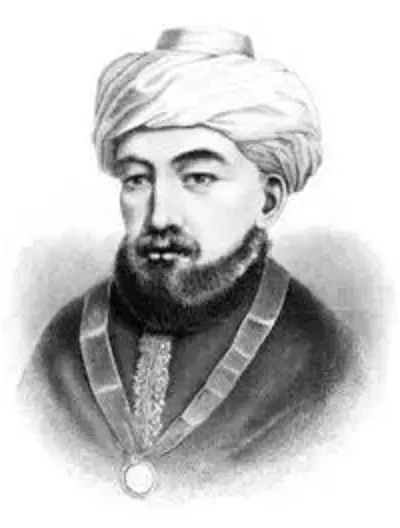
Moses ben Maimon (1138–1204), commonly known as Maimonides and also referred to by the acronym Rambam, was a medieval Sephardic Jewish philosopher who became one of the most prolific and influential Torah scholars of the Middle Ages. In his time, he was also a preeminent astronomer and physician, serving as the personal physician of Saladin. Born in Córdoba, Almoravid Empire (present-day Spain) on Passover eve, 1138 (or 1135), he worked as a rabbi, physician and philosopher in Morocco and Egypt. He died in Egypt on 12 December 1204, whence his body was taken to the lower Galilee and buried in Tiberias.
