Mustafa Akyol Quotes
It is beneficial for Turkish democracy that not all religious conservatives are united under one banner.
Akyol, Mustafa. "A Break in the Turkish Coalition." The New York Times, 26 Nov. 2013.

The "we" referred to the Tunisian Ennahda Party of which he was the founder.


Although the Puritans were the first religious group of immigrants who came to America for religious freedom, once the obtained it, they were terribly despotic in trying to force others to adopt their religious views. By seeking religious freedom the planted the seeds of democracy. By denying it to others, they also planted the seed of the First Amendment. Those who insisted upon separation of church and state always cited the Puritans as example one of what can happen with an established church in America.

This speech was given in the early days of WWII when it was far from clear that we would win.

Ironically, without the word “wicked” most people would regard the first sentence as a good description of elements of a modern democracy. It illustrates that for the Islamic fundamentalist democracy substitutes the rule of man for the rule of God, freedom of speech allows heresy and blasphemy to to uttered and communicated, and religion which is supposed to inform and direct politics. So what is good for the lover of democracy is the very thing that is bad for Islam. This is not a uniquely Islamic viewpoint. It has been and is held by fundamentalist Christians and Jews as well who would return to Biblical law punishing blasphemy and heresy with death and have religion drive all politics.


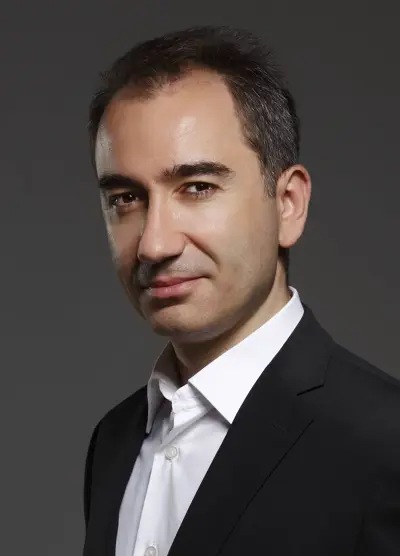
Mustafa Akyol is a Turkish writer and journalist. He is the author of Islam without Extremes: A Muslim Case for Liberty, long-listed in 2012 for the Lionel Gelber Prize, a literary award for the world's best non-fiction book in English. He became a contributing opinion writer for the International New York Times in 2013. He is mainly famous in the western world for his arguments that Islam is highly compatible with classical liberalism and Enlightenment values, and that Islamic practice and the governance of Muslim-majority countries should be reformed along those lines similar to what previously happened in Christian-majority Europe.
