Henry IV of France Quotes
It has pleased us to promise and assure him that none of our subjects but himself [Sieur de Monts] shall be permitted to trade in pelts and other merchandise, for the period of one year only, in the lands, regions, harbors, rivers, and highways throughout the extent of his jurisdiction:
Henry of Navarre. This monopoly was given to finance French activities in the New World. See {610792}.
Henry IV, 1553-1610, King of France, Monopoly on furs in Canada and America, January 7, 1608
Sourced by: Eigen's Political and Historical Quotations

The fur trade as a result became the main driver for French colonization of Canada and America.

Draft language is sometimes attributed to Senator George F. Hoar.
See {642189} where Sherman explained some of the reasons for the law.


In the particular case, the issue was whether the businessmen of our French allies should suffer from a devaluation of American currency that was then contemplated. American merchants would pay for goods in devalued currency and pay back loans with the same. Americans, and most other trading nations, have been on both sides of this issue ever since as a function of the specifics of the issues and the times.


He was the judge who presided over the breakup of AT&T in 1984


Patents, copyrights, and franchises are but 3 common (and legal) ways of obtaining a onopoly position.See Adam Smith {627790} for a similar thought.
The French had a much different agenda in the new world than the British who wanted to create residential colonies. The French were more interested in trade—not in establishing permanent colonies. The result was that the French were in many ways better trading partners for the Indians than the English. They came without women, intermarried among the Indians and learned the languages; they did not contest for land, and they paid the Indians more for pelts and furs than the English were willing to. At the same time they exacerbated conflicts with the colonists, and encouraged Indian attacks on settlers as that kept competition out. They were not above giving Indians alcohol and encouraging them to rob the furs and/or kill their English competitors. So on two levels, they had to be removed. See the military view of Robert Rogers: {614122}.

Turgot was one of the most advanced economic thinkers in Europe and realized, even before most of the Americans, that by freeing itself England, that the Americans would be forced to become free traders and that in turn would make America a major Economic power despite the fact that American economic policy over the years vacillated between protectionism and free trade.

Most companies in a capitalistic system compete mightily to obtain monopolistic positions so they can avoid capitalistic competition thereafter.


- Born:
- Nationality: French
- Profession: Royalty, King of France, Monarch
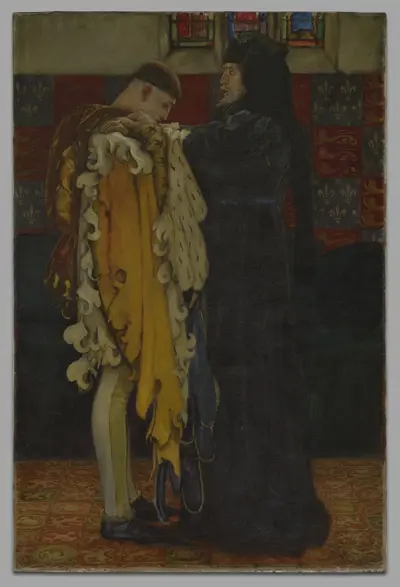
Henry IV (French: Henri IV; 13 December 1553 – 14 May 1610), also known by the epithets Good King Henry or Henry the Great, was King of Navarre (as Henry III) from 1572 and King of France from 1589 to 1610. He was the first monarch of France from the House of Bourbon, a cadet branch of the Capetian dynasty. He was assassinated in 1610 by François Ravaillac, a Catholic zealot, and was succeeded by his son Louis XIII.
