Joseph Stiglitz Quotes
It does not make sense to privatise the military. Proponents of privatisation often argue that it encourages customer responsiveness... For the most part, those who interact with military contractors do not do so voluntarily; there is no market where they can choose to be integrated by a contractor from the United States, or by some other provider. Indeed, the incentives are perverse. The incentives of the contractor are to minimise his costs, and those incentives do not take into account the nation’s broad range of public objectives … the Government becomes so dependent on their [contractors] services that it’s almost impossible to get rid of them
An additional “advantage” is to artificially minimize the number of American troops involved in an unpopular conflict.
Joseph Stiglitz, Chairman, President's Council of Economic Advisors, Chief Economist, World Bank, The Three Trillion Dollar War, 2008
Sourced by: Eigen's Political and Historical Quotations

He was referring to the famous Eisenhower quotation of 1961. See {641114}.


In the Iraq and Afghanistan Wars, private contractors wlere hired to provide many services in the war zone including intelligence, security and guard service. In carrying out their responsibilities, some private contractor employees killed and/or tortured suspects or innocent bystandarders against the laws of the United States. If American soldiers had committed these crimes, they would be court marshalled. However, the Code of Military Regulations and other laws applied only to armed forces personnel.

Webb was opposing the all volunteer army which became a reality despite his and others objections.

This was one of the reasons that President Eisenhower warned about the ‘Military-Industrial Complex. See {641114}.


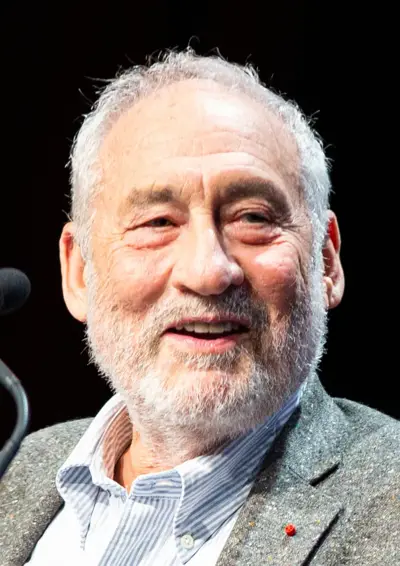
Joseph Eugene Stiglitz is an American economist, public policy analyst, and a professor at Columbia University. He is a recipient of the Nobel Memorial Prize in Economic Sciences (2001) and the John Bates Clark Medal (1979). He is a former senior vice president and chief economist of the World Bank and is a former member and chairman of the (US president's) Council of Economic Advisers. He is known for his support of Georgist public finance theory and for his critical view of the management of globalization, of laissez-faire economists (whom he calls "free-market fundamentalists"), and of international institutions such as the International Monetary Fund and the World Bank.
