Mark Fowler Quotes
The perception of broadcasters as community trustees should be replaced by a view of broadcasters as marketplace participants.
Mark Fowler, Chairman, Federal Communications Commission (Republican), Statement explaining the FCC abandonment of the Fairness Doctrine {35754}, 1983
Sourced by: Eigen's Political and Historical Quotations


Tsvangirai’s party had won the election of 2008, but the Dictator Robert Mugabe refused to relinquish power. Sanctions against Zimbabwe by most of the world pressured Mugabe and Tsvangirai to accept a power sharing arrangement. However, Mugabe once the sanctions were lifted reneged on the agreement. He still controlled the state media which was, according to the 2008 agreement, to be completely non partisan. What this quotation shows is that the dictator maintained his control over the military, the police, and the media and with that really controlled the country.


This is an incredible quotation by the American political standards of the 21st century. Coolidge was President and the conservative wing of the Republican Party controlled Congress. There were thousands of radio stations operating. The small commercial and amateur, and community radio stations were thriving but they could only afford small transmitters that only reached the local area. The large commercial radio stations wanted by be able to broadcast to the entire country (see {641989})and could afford huge transmitters but if a local station was on the same frequency the small station would dominate in the local area and not the large stations. The large corporations then lobbied the Federal Radio Commission and the Congress and this policy was adopted. Thousands of small radio stations were kicked off the airwaves so that the large corporate stations could have “clear channels” across the country. It turned out that the small entities did not have equal rights and it was a blatant Federal handover to the large corporations. (See {641992}).)Small stations were only able to broadcast with the advent of FM which only became economically feasible in the late 1940s although FM was patented in 1933.


Ronald Reagan’s media expert, Michael Deaver, developed a new approach to Presidential appearances. He realized that if the President made a 5 or 10 minute speech at an event, the Evening News would choose one or two 10-15 second excerpts, and that was what the vast majority of the country would see. Therefore, he reasoned, the words spoken meant relatively little. It was the image what would last in people’s memory. Therefore, he worked hard to concentrate on getting the right background for the President’s appearance. The Statue of Liberty, a naval ship, a factory at work. The set of images that people would have of the President in these different appearances would define the President in the minds of most people. Deaver would be more concerned that the TV camera’s showed the background scene he had planned (rather than a strange angle or just a close-up of the President’s face) than he would be about which words—sound bytes—the TV station would select. Hence Baker’s observation that words were less important than the TV images.


The Commerce Department was then in charge of Radio regulation and policy. Hoover, a great administrator and businessman, had a terrible record with policy making. He almost always zigged when he should have zagged. He let General Douglas MacArthur loose to brutalize protesting veterans, would not use the Federal Government to provide any relief or stimulus as Roosevelt did in the Great Depression, and here, where he took a very left wing position on Radio Advertising, he was wrong again as it was the very thing he wanted to avoid that provided all the sponsors resources for all the great radio program development.


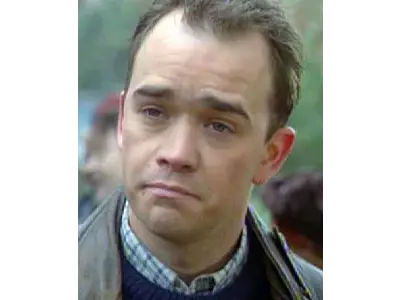
Mark Fowler is a fictional character in the BBC soap opera EastEnders. Mark, an original regular character when the series started in February 1985, became a semi-regular after his original portrayer David Scarboro was written out of the role in April 1985. Scarboro made brief returns to the role in 1986 and 1987. Scarboro died by suicide in April 1988 and subsequently Mark was recast two years later on his return, with former Grange Hill regular Todd Carty taking on the role. From this point the character was a permanent fixture in the series and Carty remained in the role until the character was written out of the series in early 2003.
