William Henry Moody Quotes
It does not follow … that a procedure settled in English law at the time of the emigration, and brought to this country and practiced by our ancestors, is an essential element of due process of law. If that were so, the procedure of the first half of the 17th century would be fastened upon the American jurisprudence like a straightjacket, only to be unloosed by constitutional amendment
Some of the “originalist” judges like Antonin Scalia believe that the “straightjacket” was what was intended by the originators of the Constitution and this was a good thing.
William Henry Moody, 1853-1917, U. S. Congressman (Republican, MA), U. S. Supreme Court Justice, Twining v New Jersey, 1908
Sourced by: Eigen's Political and Historical Quotations


He had visited the House of Commons. The “problems” resulted from the fact that the English had to make their own laws rather than have them provided by God as in Islamic legal systems—Sharia.


At the time he was not an official of the bar association.

James just before he became king was very much aware of the unpopularity of the concept of sovereign immunity and the danger of an English King acting against traditional law of the land however, James did not wish to set at precedent that the king was bound by any way and subject the law of his inferiors. He seemed to find a brilliant solution:

Then, as now, there were some who claimed there should be a larger role for Christianity in American law and governance. One such view in the first half of the 19th century was that whatever was unspecified in the Constitution deferred to the common law. England had an official state Christian church and therefore Christianity must have been a part of English common law and hence should be a significant part of American law and governance. Jefferson was one of the many leaders who refuted the notion by pointing out that the common law in England predated Christianity.


See Matthew Hale for a concurring view and Thomas Jefferson for a contrasting one.

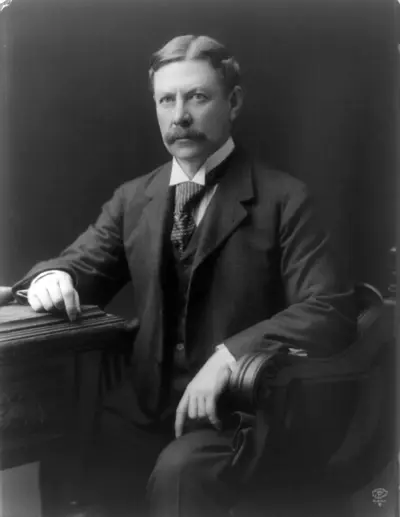
William Henry Moody was an American politician and jurist who held positions in all three branches of the Government of the United States.
