Eleanor Roosevelt Quotes
It chills my soul to think of American children behind barbed wire.
She was very conflicted about the interment of Americans of Japanese origin. She understood the arguments for the internment and some had some merit for her. But she was opposed to the internment from the beginning. However, she frequently discussed this issue privately with FDR. She consulted with the judges who dissented in the law suits and presented their arguments to her husband. She visited some of the internment camps and maintained a correspondent with some of the interned Japanese American leaders. Earlier, once FDR signed the internment executive order, she maintained a public silence on the issue until 1944 when she publicly broke with her husband on this issue. (While that may be shocking to us today—for a first lady to publicly disagree with the President—for Mrs. Roosevelt, it was not unusual and was not the scandal that it might be today. Throughout her over 3 terms as First Lady, she wrote a daily newspaper column and did a weekly radio show for much of the period.
Eleanor Roosevelt, 1884-1962, First Lady (Franklin Delano Roosevelt), U. S. Delegate to the United Nations, Reacting to the internment of Japanese Americans during WWII, 1944
Sourced by: Eigen's Political and Historical Quotations


Shortly after the Japanese attack on Pearl Harbor:

She was a teenager at the time. The leaders organized some entertainment and she performed traditional Japanese dances. In the beginning there was no school, no education or training, no entertainment. Later there were some rudimentary opportunities provided by the authorities.


The Proclamation was a belated admission of the disgraceful internment of loyal Japanese Americans during WWII. See {587961}. “Evacuation” was the euphemism for rounding up Japanese American citizens and putting them in internment camps. Not a single Japanese American was involved in any effort to sabotage or undermine the United States. The same cannot be said about the German Americans where a few did work against U. S. interests and yet the German-Americans were never rounded up. The explanation of the difference has been long debated. Racism was a part of it; California paranoia, another. And unfortunately, Japanese Americans owned very desirable land in California and when they could no longer make their payments some interests gobbled up the land and that was a motivation for some. Regardless, it was one of the low points in American history, and warranted this Presidential and national apology.


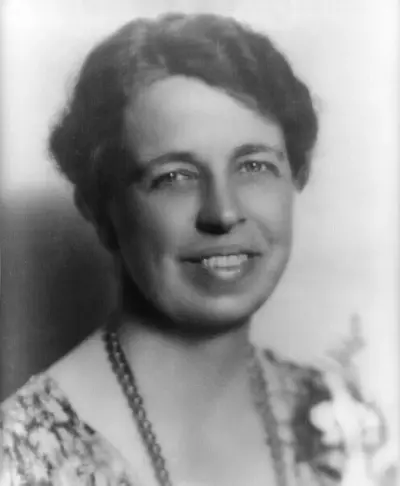
Anna Eleanor Roosevelt was an American political figure, diplomat and activist. She served as the First Lady of the United States from March 4, 1933, to April 12, 1945, during her husband President Franklin D. Roosevelt's four terms in office, making her the longest-serving First Lady of the United States. Roosevelt served as United States Delegate to the United Nations General Assembly from 1945 to 1952. President Harry S. Truman later called her the "First Lady of the World" in tribute to her human rights achievements.
