Stephanie Ruhle Quotes
There are women crossing the border, finding border control agents to turn themselves in so they can begin the process of asylum, only to have their children taken from them with no idea of where they're going or when they'll see them again.
Ruhle, Stephanie. MSNBC Live with Stephanie Ruhle. MSNBC, 18 June 2018.


She was very conflicted about the interment of Americans of Japanese origin. She understood the arguments for the internment and some had some merit for her. But she was opposed to the internment from the beginning. However, she frequently discussed this issue privately with FDR. She consulted with the judges who dissented in the law suits and presented their arguments to her husband. She visited some of the internment camps and maintained a correspondent with some of the interned Japanese American leaders. Earlier, once FDR signed the internment executive order, she maintained a public silence on the issue until 1944 when she publicly broke with her husband on this issue. (While that may be shocking to us today—for a first lady to publicly disagree with the President—for Mrs. Roosevelt, it was not unusual and was not the scandal that it might be today. Throughout her over 3 terms as First Lady, she wrote a daily newspaper column and did a weekly radio show for much of the period.


JOUAM was a nativist workingmen's organization founded in 1853 to resist the competition for jobs from immigration. See related quote for membership criteria. At its peak it had over 200,000 members. “Mechanics” was the term used for a wide variety of skilled craftsmen from plumbers to bricklayers. JOUAM is the oldest fraternal order in America.

Denmark’s welfare, unemployment, and social security benefits were among the best in the world. Some immigrants would come to Denmark just for the benefit structure. This quotation is a Danish version of the statement by Senator Dianne Feinstein {601303}.


The United States policies at the time encouraged tens of thousands of foreigners to study in America—especially mathematics, science and engineering. Then after they graduate we expel them despite the fact that we have a great labor shortage of these technical skill areas. The result is that the American economy lags in one of its most important areas, high technology for lack of qualified people to fill the jobs. Larger American companies then set up operations overseas and hire many of the people who we kicked out, so they do not pay any taxes to America. The best and most ambitious of these American trained foreigners, then start their own businesses abroad, create many jobs that never benefit Americans and then sell to America competing with American firms. New York City alone had tens of thousands of open jobs at very high salaries for which there were no Americans to fill while the New York schools had trained enough foreigners to fill the jobs, but our national policies forced the best and the brightest to leave and compete with us.


The issue of admission of relatives of citizens had, in the 20th century, become controversial as some political forces worked to restrict immigration. The result of politicizing this issue was that the relatives who would receive immigration priorities would change every time Congress legislated about anything involving immigration and asylum. Immigrants from some countries could have their aunts and uncles get priority while other countries it was only siblings, children and parents. And still others would be children only. There was also racial and ethnic discrimination in that nations with white populations received a broader right to have relatives immigrate than non-white.


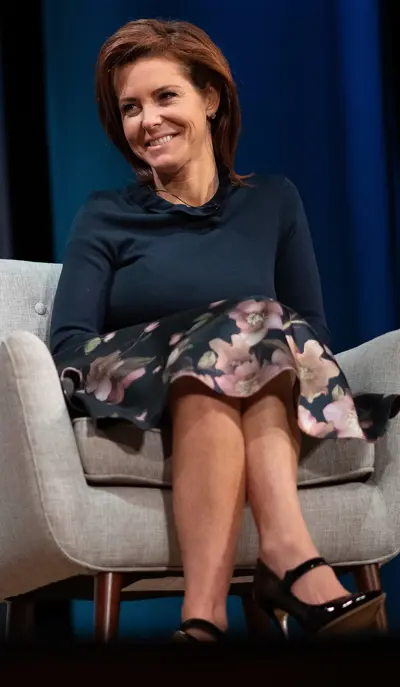
Stephanie Ruhle Hubbard is the NBC News Senior Business correspondent and anchor of MSNBC Live with Stephanie Ruhle and Velshi & Ruhle. Previously, Ruhle was managing editor and news anchor for Bloomberg Television and editor-at-large for Bloomberg News. Ruhle co-hosted the Bloomberg Television show Bloomberg GO. Ruhle was one of three Bloomberg reporters who broke the story of the London Whale, identifying the trader behind the 2012 JPMorgan Chase trading loss.
