Lord Byron Quotes
Is there not blood enough upon your penal code?
In 1812 England was in a major depression and workers were breaking their weaving frames in protest. Parliament was debating a bill that would provide the death penalty for such activity. 6th Baron Byron
George Gordon Byron, 1788-1824, British Poet & Member of Parliament, Maiden Speech, House of Lords, February 27, 1812
Sourced by: Eigen's Political and Historical Quotations


Although this is generally followed as a legal principle in America, states like Texas have executed felons who most other jurisdictions would see as Coke’s “mad man.”

Einstein had changed his mind. He like almost everyone else at the time favored the death penalty, but in 1927 came to the new conclusion for the same reasons that many American politicians stated 70 years later. He had no compunctions against capital punishment for murderers who were dangers to society, but the potential error of the justice system led him to oppose state sanctioned execution. At the time the number of errors in capital cases that had been demonstrated were few. But as a scientist, Einstein knew that all human endeavors were prone to error. He was a strong law and order supporter however—see {588606}.

Elliott had electrocuted over 400 condemned criminals including Sacco and Vanzetti and the first woman who was electrocuted.


The capital punishment debate was raging in Europe. Belgium and parts of Switzerland had just abolished the death penalty.
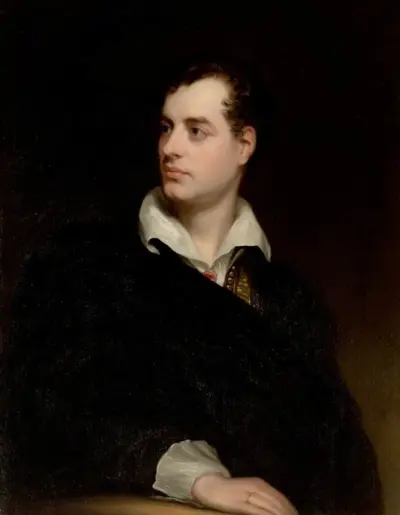
George Gordon Byron, 6th Baron Byron, FRS known simply as Lord Byron, was an English peer, who was a poet and politician. He was one of the leading figures of the Romantic movement and is regarded as one of the greatest English poets. He remains widely read and influential. Among his best-known works are the lengthy narrative poems Don Juan and Childe Harold's Pilgrimage; many of his shorter lyrics in Hebrew Melodies also became popular.
