George Mason Quotes
Is it to be expected that the Southern States will deliver themselves bound hand and foot to the Eastern States? A few rich merchants in Philadelphia, Boston, and New York could thereby monopolise the staples of the Southern States and reduce their value.
Mason, George. Address to the Constitutional Convention. 29 Aug. 1787. The Records of the Federal Convention of 1787, edited by Max Farrand, vol. 2, Yale University Press, 1911, p. 449.


The issue of free trade verses protectionism has been with us throughout American history with national sentiments going one way and then later the other, only to come back and the cycle has gone on. Floyd was very modern in his economic views, so much so that he, even as a Southern politician, opposed slavery on the grounds that it was economically inefficient and the South would never develop industrially if it had no incentive, as existed in the North and England, to reduce the amount of labor required for economic opportunity. He was right on that point as well.

The New Englanders were Jefferson’s greatest foes as they tended to be supporters of John Adams, Jefferson’s great political enemy at the time. Jefferson felt that the policies of George Washington and John Adams tended to favor the North to the disadvantage of the South. Ironically, the Northerners were convinced of the bias of the administration policies in the other direction—the pandering to the South especially on the issue of slavery.


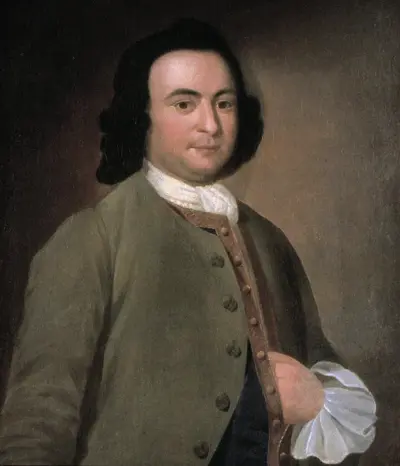
George Mason IV was an American planter, politician and delegate to the U.S. Constitutional Convention of 1787, one of three delegates who refused to sign the Constitution. His writings, including substantial portions of the Fairfax Resolves of 1774, the Virginia Declaration of Rights of 1776, and his Objections to this Constitution of Government (1787) opposing ratification, have exercised a significant influence on American political thought and events. The Virginia Declaration of Rights, which Mason principally authored, served as a basis for the United States Bill of Rights, a document of which he has been deemed a father.
