Book of Isaiah Quotes
Is a land born in one day? Is a nation brought forth at once?
Old Testament, Book of Isaiah 66:8
Sourced by: Eigen's Political and Historical Quotations


Four years later the President embarked on a nation-building effort in Iraq which was beset with many problems.


Opposition to the Bolsheviks

From this quotation, {615902} and {615901} it is clear that the framers of the Constitution intended the treaty making powers to be shared by the President and the Senate. In practice, in modern times treaties are usually initially negotiated by diplomats under the supervision of the President and the Senate gets to concur or not in the ratification process. However, there have been a number of treaty failures including the League of Nations where the lack of coordination has resulted in a situation where the Senate had to accept or reject something which the President had negotiated and the Senate rejected the treaty.


This quotation elevated geography in its importance, even though the claim was slightly exaggerated.


The minority Ibo people were Christian and Animist and after independence they were seriously discriminated against by the majority with the Islam – Christian conflict being a major problem. The Ibo were used to decentralized government and local autonomy while the majority Housa people wanted a strong central Islamic government. The Ibo, with a disproportionate number of educated, honest, intellectuals broke off as Biafra and a one sided civil war took place where many of the Ibo were exterminated. There has been no reconciliation, or apologies. A large proportion of Nigeria’s oil is in the Biafra region and even in the 21st century the local people have never benefited from the oil revenue which end up with the Central Government and much lined the pockets of corrupt officials as Nigeria is one of the most corrupt nations on earth.


Note the belief that the author has the belief that over time homogeneity is important in a state, whereas the most successful modern states have been ones that are diverse—i.e. America, Britain, China, France. There have been some small successful states like Norway that are homogeneous, but large states need the heterogeneity.
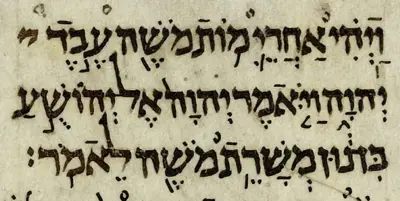
The Book of Isaiah (Hebrew: ספר ישעיהו, [ˈsɛ.fɛr jə.ʃaʕ.ˈjaː.hu]) is the first of the Latter Prophets in the Hebrew Bible and the first of the Major Prophets in the Christian Old Testament. It is identified by a superscription as the words of the 8th-century BCE prophet Isaiah ben Amoz, but there is extensive evidence that much of it was composed during the Babylonian captivity and later. Johann Christoph Döderlein suggested in 1775 that the book contained the works of two prophets separated by more than a century, and Bernhard Duhm originated the view, held as a consensus through most of the 20th century, that the book comprises three separate collections of oracles: Proto-Isaiah (chapters 1–39), containing the words of the 8th-century prophet Isaiah; Deutero-Isaiah (chapters 40–55), the work of an anonymous 6th-century BCE author writing during the Exile; and Trito-Isaiah (chapters 56–66), composed after the return from Exile. Isaiah 1–33 promises judgment and restoration for Judah, Jerusalem and the nations, and chapters 34–66 presume that judgment has been pronounced and restoration follows soon. While virtually no scholars today attribute the entire book, or even most of it, to one person, the book's essential unity has become a focus in more recent research.
